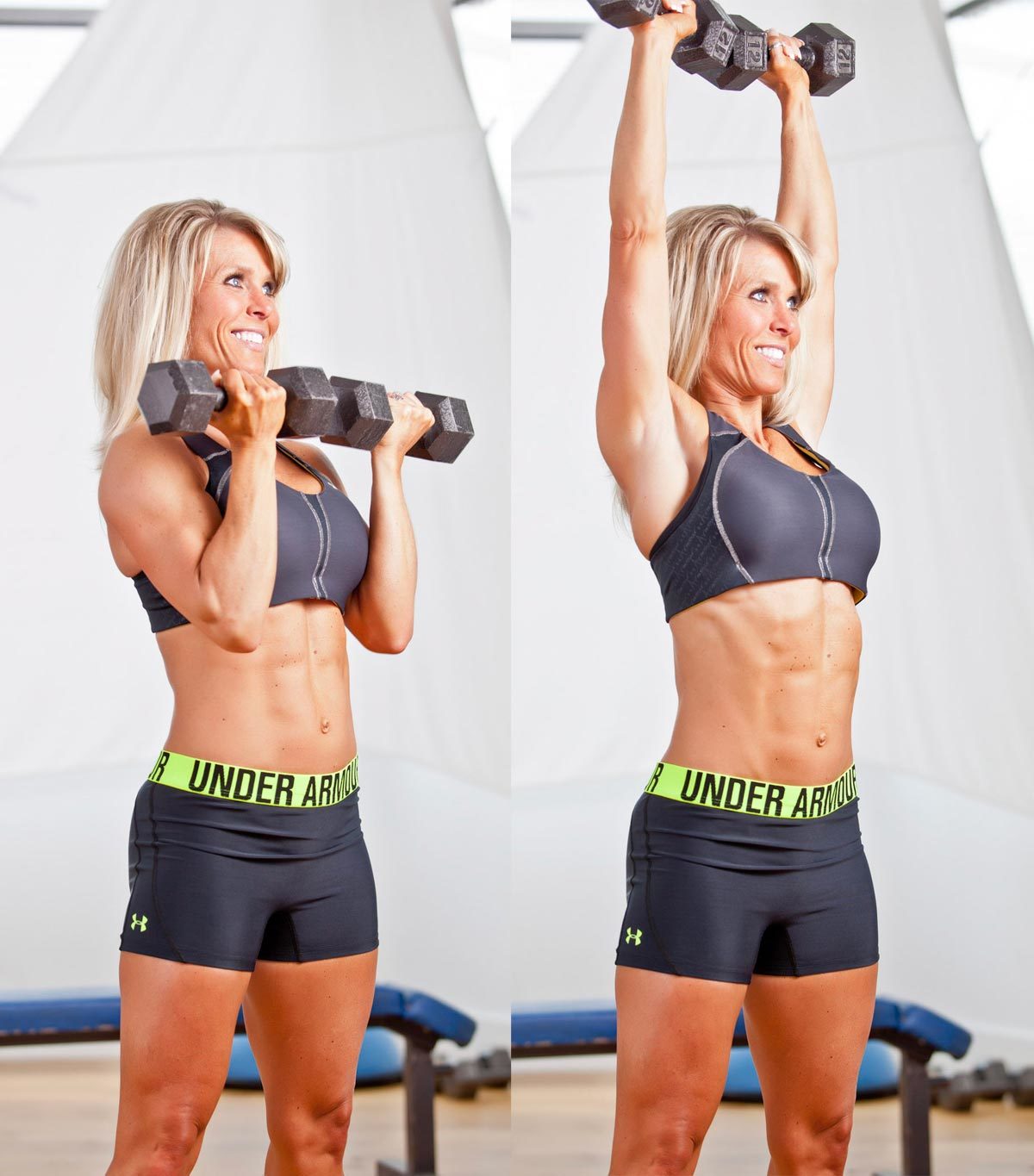
Twisting Overhead DB Press Arnold Press

Arnold Press with Dumbbells

FITBODY Exercise Library · Shoulders

Arnold Press

The Arnold press, also called the twisting overhead dumbbell shoulder press, is a rotating variation of the shoulder press that hits all three heads of the deltoids. It is a favorite of mine for building strong, sculpted shoulders in women over 40.

Target MusclesDeltoids, all three heads
Also WorksTriceps, trapezius
EquipmentDumbbells
LevelIntermediate
MovementTwisting overhead press
Watch ForGoing too heavy on the rotation

What Is the Arnold Press?

The Arnold press, also known as the twisting overhead dumbbell shoulder press, is a popular shoulder exercise that targets the deltoids, trapezius, and triceps. Named after bodybuilding legend Arnold Schwarzenegger, it is a variation of the traditional shoulder press that offers unique benefits and challenges. The rotating path lets the shoulder move through a bigger range and brings in more of the side of the shoulder, which is what makes it such an effective shaping move.

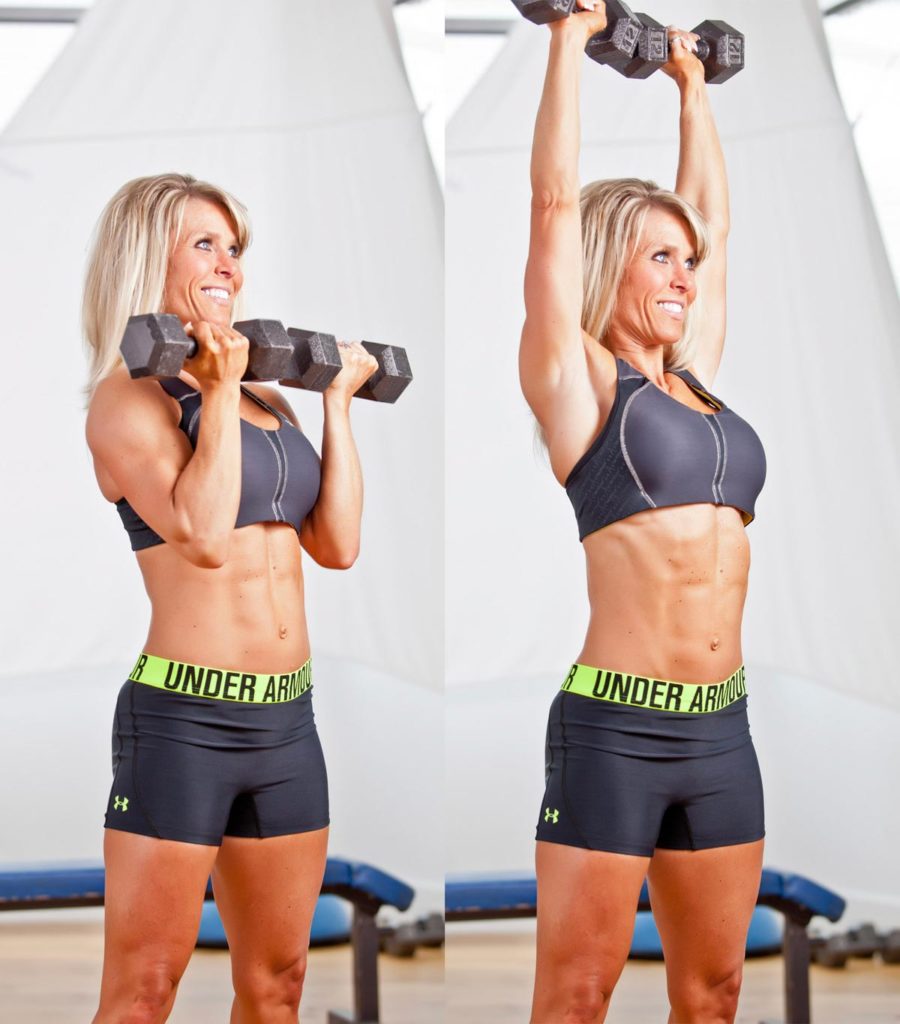
Twisting overhead dumbbell press, the Arnold press, for sculpted shoulders
The twisting overhead dumbbell press, or Arnold press, builds strong, defined delts.

What Muscles Does the Arnold Press Work?

The Arnold press is a compound exercise that engages several muscles of the upper body, led by all three heads of the deltoids. For a closer look at the shoulder muscle, see this deltoid anatomy overview. Building strong shoulders fits naturally into a broader strength training plan for women over 40.

Primary
Deltoids, all three heads
Secondary
TricepsTrapezius
See the full muscle breakdown
  • Anterior deltoids: the front of the shoulders, heavily involved in the press.
  • Lateral deltoids: the sides of the shoulders, which the rotation emphasizes more than a standard press.
  • Posterior deltoids: the rear of the shoulders, engaged through the rotating path.
  • Triceps: help extend the elbows to press the weight overhead.
  • Trapezius: assists and stabilizes the shoulder girdle.

How to Do the Arnold Press

1
Start light. Begin with light weights and gradually increase as you get comfortable with the movement.
2
Set your stance. Stand tall with your feet about shoulder width and a slight bend in your knees.
3
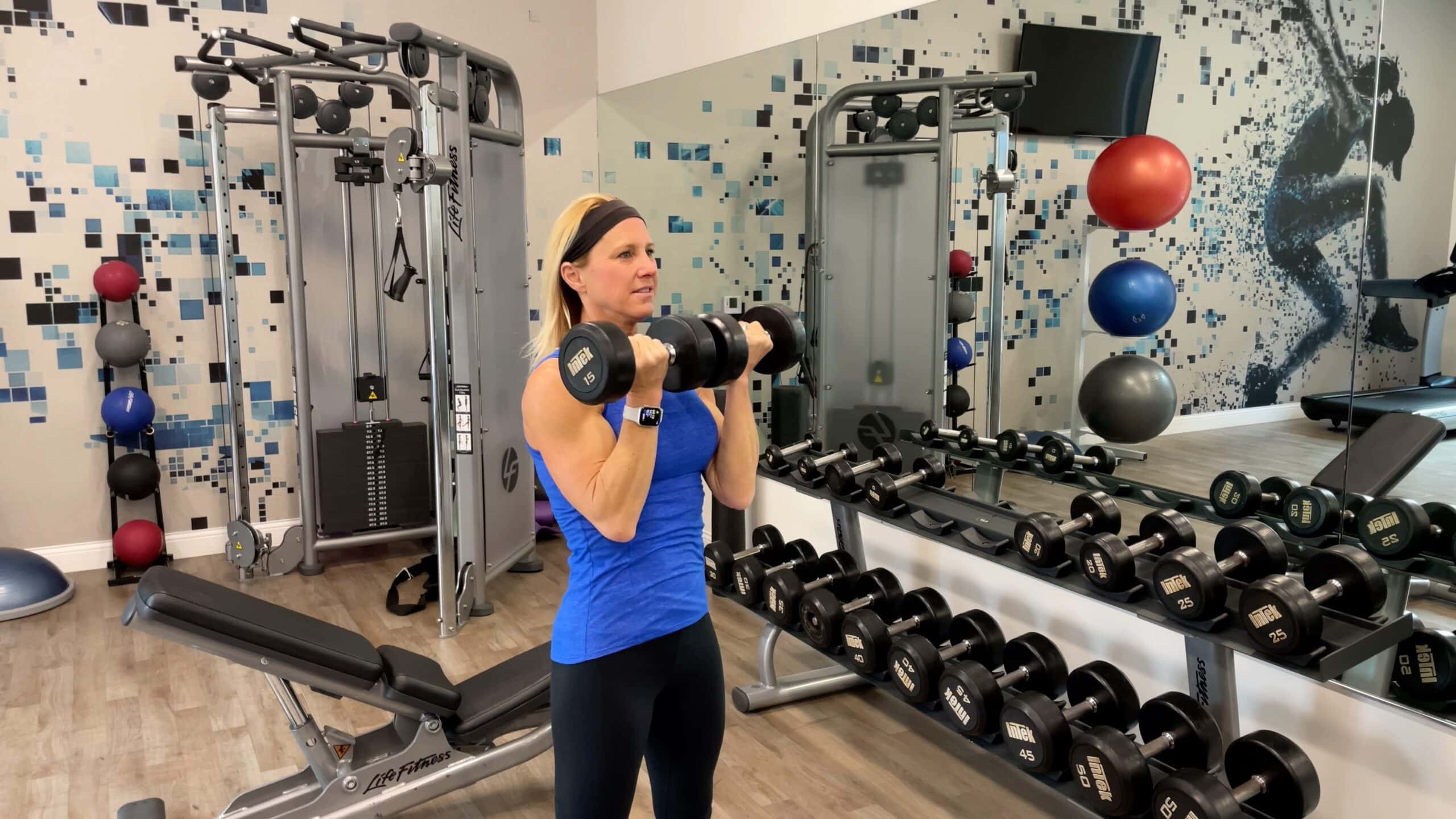
Set your start position. Hold the dumbbells at shoulder level with a semi neutral grip, palms facing toward you, and your elbows at about a 90 degree angle.
4
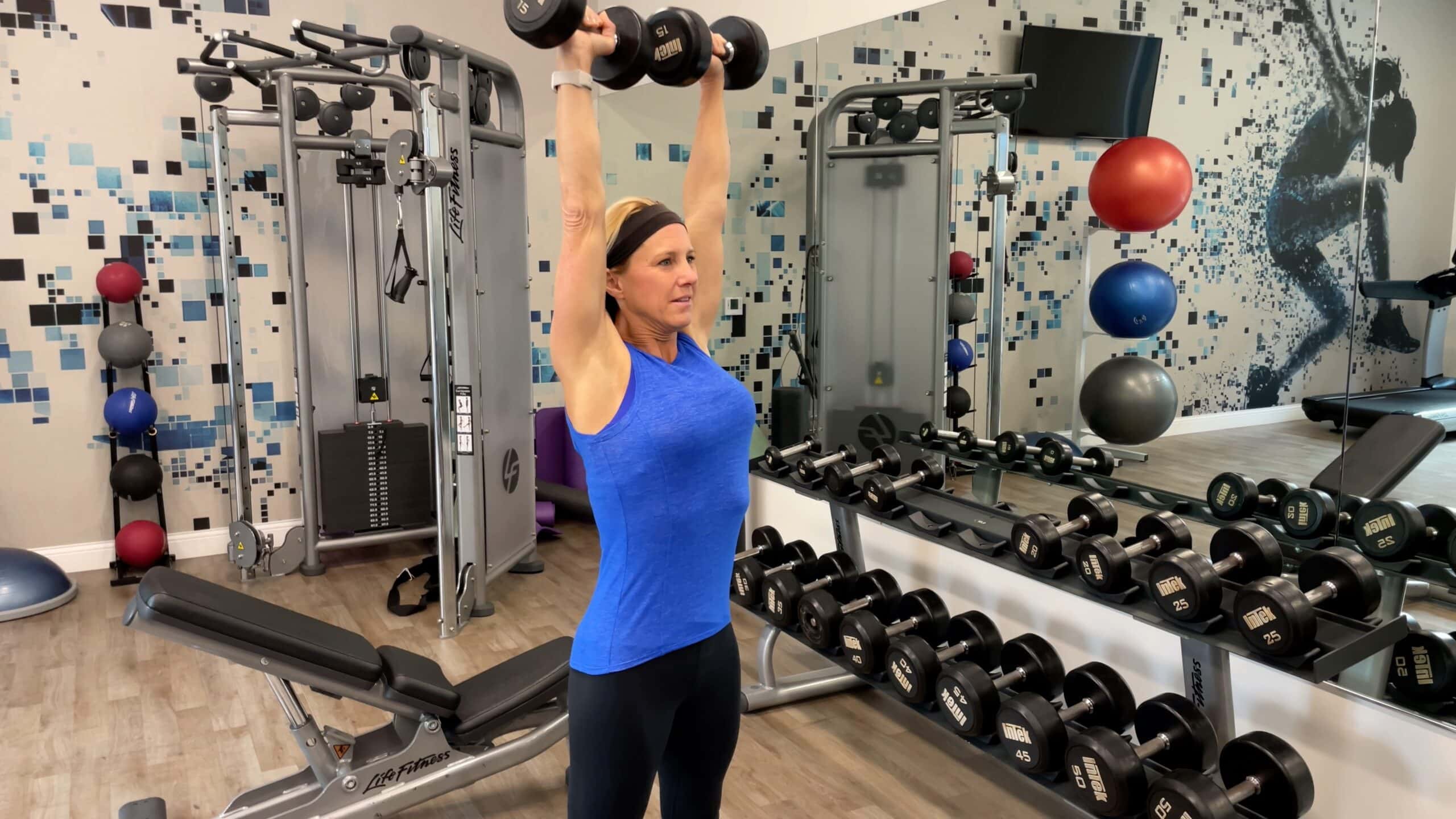
Press and rotate. Rotate your wrists and elbows out as you press the dumbbells up and overhead, until your arms are fully extended and your palms face forward.
5
Lower with control. Reverse the rotation and lower the dumbbells back to shoulder level with control.
6
Stay braced. Keep your core tight and your chest up throughout, and repeat for your reps.
Julie’s Tip

Let the rotation happen smoothly as you press, and pick a lighter weight than your usual shoulder press. With the women I coach, the twist is what makes this exercise special, but it also means the shoulder is working through a bigger range, so control matters more than load. Keep your core braced and your chest tall so the work stays in your delts.

Arnold press starting position with a semi neutral grip and elbows at ninety degrees
Start with a semi neutral grip, palms facing toward you, elbows at about ninety degrees.
Arnold press top position rotating the wrists and pressing the dumbbells overhead
Rotate the wrists and elbows as you press overhead until the arms are fully extended.

Sets and Reps

Match your sets and reps to your goal, and use a lighter weight than your standard shoulder press so you can control the rotation.

GoalSetsReps
Strength and muscle3 to 48 to 12
Shoulder shaping310 to 12
Beginner or learning form2 to 310 to 12

Rest 60 to 90 seconds between sets. Include shoulder work one to two times a week, and add weight only once your rotation stays smooth and controlled.

Arnold Press vs. Shoulder Press

Both the Arnold press and the standard shoulder press build shoulder strength and size, and the better one depends on your goals. The main difference is the rotation and the grip.

  • Arnold press. Uses a rotating movement of the wrists and elbows and a semi neutral grip, palms facing toward you at the start. This allows a greater range of motion and more work for the lateral deltoids.
  • Shoulder press. Uses a straight up and down path and a pronated grip, palms facing forward. This limits the range of motion and puts more emphasis on the front of the shoulders.

The Arnold press offers a greater range of motion, more lateral deltoid activation, and added variety, while the shoulder press is simpler and easier for beginners to learn. Including both gives your shoulders a well rounded, balanced approach.

Is the Arnold Press Right for You?

The Arnold press is safe and effective for most people who have adequate shoulder mobility and stability and use good form. If you have a history of shoulder injury or pain, evaluate carefully whether this is the right move for you, and check with a physical therapist or doctor if you are unsure. If you are newer to lifting, start with light weights and master the rotation and form before adding load, and know that a standard shoulder press is an easier place to begin.

Common Mistakes to Avoid

  • Going too heavy. The rotation and longer range make this harder than a standard press, so start lighter than you think.
  • Rushing the rotation. Turn the wrists and elbows smoothly rather than snapping through the twist.
  • Arching the lower back. Keep your core braced and your ribs down so you press with your shoulders, not your back.
  • Pressing through pain. Stop if you feel shoulder pain rather than the normal work of the muscles, and check your form or your mobility.

Arnold Press FAQs

What muscles does the Arnold press work?

The Arnold press is a compound shoulder exercise that works all three heads of the deltoids, the front, side, and rear of the shoulders. It also brings in the triceps, which help press the weight overhead, and the trapezius, which stabilizes the shoulder girdle. The rotation is what sets it apart, since it emphasizes the lateral deltoids more than a standard press. Training these muscles builds shoulder strength and size, improves mobility and stability, and supports posture. It is one of my favorite moves for well rounded shoulders.

Is the Arnold press better than the shoulder press?

Neither is strictly better, since both build shoulder strength and size effectively, and the right choice depends on your goals. The Arnold press offers a greater range of motion, more lateral deltoid activation, and added variety, thanks to the rotation. The standard shoulder press is simpler and often easier for beginners to learn and perform with good form. Because they each bring something different, using both gives your shoulders a more complete, balanced approach. I like to rotate them in a program rather than pick just one.

What is the difference between the Arnold press and the shoulder press?

The main differences are the movement pattern and the grip. The Arnold press uses a rotating movement of the wrists and elbows and starts with a semi neutral grip, palms facing toward you, which allows a greater range of motion and more lateral deltoid work. The standard shoulder press uses a straight up and down path with a pronated grip, palms facing forward, which limits the range of motion and emphasizes the front of the shoulders more. So the Arnold press trains the shoulders through a bigger arc, while the shoulder press is more direct. Both are useful, they simply challenge the shoulder a little differently.

Is the Arnold press good for everyone?

The Arnold press is safe and effective for most people, as long as they have adequate shoulder mobility and stability and use good form. If you have a history of shoulder injury or pain, it is worth carefully evaluating whether this move is right for you, and checking with a physical therapist or doctor if you are unsure. Beginners should start with light weights and focus on mastering the rotation and form before adding load. Because the shoulder works through a large range here, control matters more than weight. When in doubt, a standard shoulder press is an easier place to start.

How much weight should I use for the Arnold press?

Start lighter than you would for a standard shoulder press, because the rotation and longer range of motion make the Arnold press more demanding to control. The right weight lets you rotate smoothly and press overhead without arching your back or losing form. If the twist gets sloppy or your shoulders feel strained, drop the weight. Clean, controlled reps build the shoulders better than heavy, rushed ones. Add weight gradually as your control and strength improve.

References

  1. Saeterbakken, Atle H., and Marius S. Fimland. “Effects of Body Position and Loading Modality on Muscle Activity and Strength in Shoulder Presses.” Journal of Strength and Conditioning Research, vol. 27, no. 7, 2013, pp. 1824-1831, doi.org/10.1519/JSC.0b013e318276b873.
  2. Escamilla, Rafael F., et al. “Shoulder Muscle Activity and Function in Common Shoulder Rehabilitation Exercises.” Sports Medicine, vol. 39, no. 8, 2009, pp. 663-685, doi.org/10.2165/00007256-200939080-00004.

Train With An Expert

Want a Plan Built Around You?

I’m Julie Lohre, an IFBB Fitness Pro and certified personal trainer and nutrition specialist. For more than 20 years I have helped women over 40 get stronger, leaner, and more confident through personalized online coaching built around their real lives.