
FITBODY Exercise Library · ABS
Butterfly Sit Ups
Butterfly sit ups are an ab exercise done with the soles of the feet together and knees opened to the sides. Learn proper form, muscles worked, beginner modifications, sets and reps, and common mistakes.
What Are Butterfly Sit Ups?
Butterfly sit ups are a sit-up variation performed with the soles of your feet together and your knees dropped open into a butterfly position. This setup changes the leg position compared with a traditional bent-knee sit-up and can make it easier for many people to focus on the abdominal lift.
The movement is still a trunk-flexion exercise. Your rectus abdominis helps curl the torso up, while the transverse abdominis, obliques, and spinal stabilizers help control the position. The hip adductors and groin are placed in a lengthened position, but they are not the main movers.
Butterfly sit ups are popular in functional fitness and core circuits because they are simple to set up and easy to scale. They are not a belly-fat exercise by themselves, and they are not automatically right for every back, hip, or postpartum situation. Good form, controlled range, and the right progression matter most.
How to Do Butterfly Sit Ups

Do not throw your arms to make the rep happen. Use the arm swing only as a beginner assist, then work toward a smoother curl from the abs. If your feet slide, your neck strains, or your low back slams down on the way back, shorten the range and slow down.
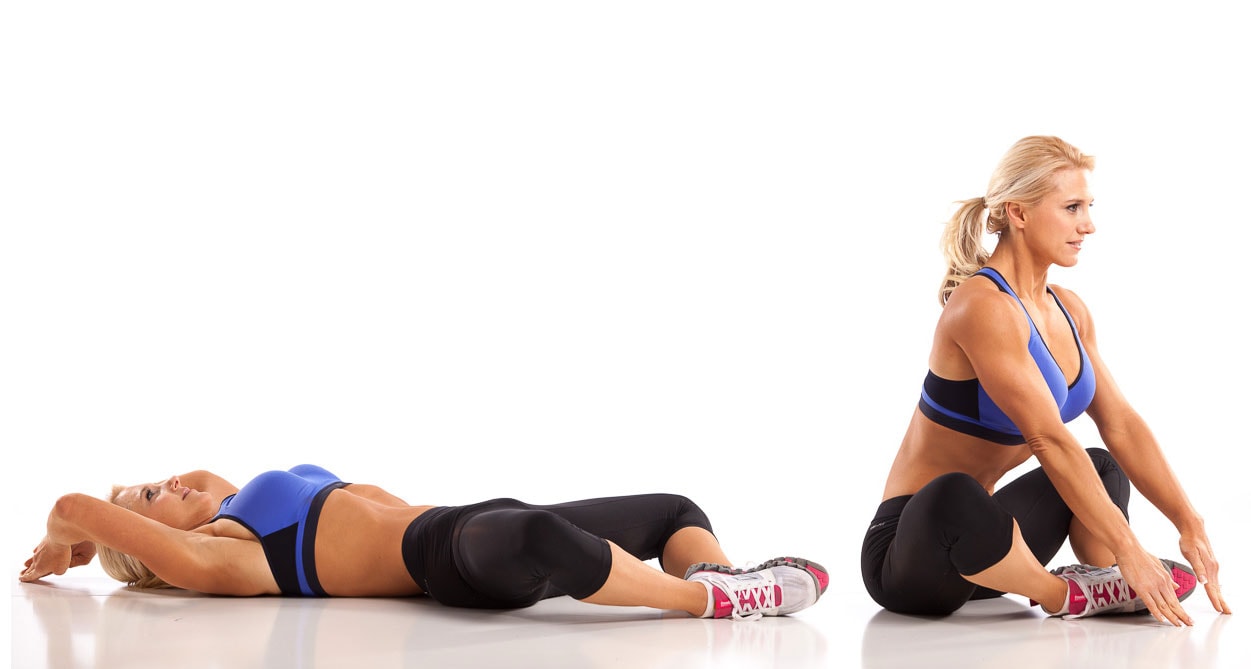


Why the Butterfly Position Changes the Exercise
In a regular bent-knee sit-up, the hips and thighs can contribute strongly if you pull yourself up aggressively. In a butterfly sit-up, the hips are opened and the feet are pressed together, which often makes the movement feel more focused through the front of the trunk.
That does not mean the hip flexors turn off completely. Research on abdominal and hip-flexor exercises shows that both abdominal and hip-flexor muscles can contribute during trunk and leg-related core movements. The butterfly setup simply changes the position and can make it easier to cue a controlled abdominal curl.
The best test is how the rep feels and looks. You should feel the abs initiate the movement, not the neck, hip flexors, or low back. If your hips take over, move your heels slightly farther away, slow down, or use a partial range.
What Muscles Do Butterfly Sit Ups Work?
Butterfly sit ups primarily train the rectus abdominis. The transverse abdominis, internal obliques, external obliques, and spinal stabilizers help control the trunk as you roll up and lower back down.
The hip adductors and groin are placed in a lengthened butterfly position, but they are not the main movers. The hip flexors may still assist, especially if you rush the rep, use too much momentum, or pull aggressively from the floor.

See the full muscle breakdown
- Rectus abdominis: Flexes the trunk as you curl from the floor to the seated position.
- Transverse abdominis: Helps create deep trunk support so the ribs and pelvis stay controlled.
- Internal and external obliques: Assist trunk control and help keep the movement centered.
- Spinal stabilizers: Help control the lowering phase so you do not collapse back to the floor.
- Hip flexors: May assist if the reps are rushed or if the abs are not controlling the lift well.
- Hip adductors and groin: Are lengthened in the butterfly setup and help maintain the leg position, but they are not the main lifting muscles.
Can Butterfly Sit Ups Help With Belly Fat?
Butterfly sit ups can strengthen the abdominal muscles and improve muscular endurance, but they do not directly burn belly fat from the midsection. Spot reduction is not how fat loss works.
Visible abdominal definition depends on a broader plan that includes total-body strength training, enough daily movement, nutrition that supports fat loss, sleep, recovery, and consistency. Butterfly sit ups can be part of that plan, but they are not a stand-alone fat-loss solution.

Sets and Reps
Butterfly sit ups work best when the reps are controlled. Use a version that lets you keep your feet grounded, neck relaxed, and lowering phase smooth.
| Goal | Sets | Reps or Time |
|---|---|---|
| Learning form | 2 to 3 | 6 to 10 reps |
| Core strength and endurance | 3 to 4 | 10 to 15 reps |
| Core finisher | 3 to 4 | 30 seconds work, 15 seconds rest |
Rest 30 to 60 seconds between sets. Progress by improving control first, then adding reps, slowing the lowering phase, crossing the arms at the chest, or holding a light weight after bodyweight reps are clean. For a full framework, see my guide to progressive overload for women.
Butterfly Sit Up Variations and Modifications
Arm-Swing Butterfly Sit Up
Reach your arms overhead on the way down and swing them forward as you sit up. This can help beginners complete the movement, but the goal is still control rather than throwing the body upward.
Butterfly Crunch
Use a smaller range and lift only the head, shoulders, and upper back. This is a good modification if the full sit-up causes hip discomfort or low-back rounding.
Ab Mat or Towel-Supported Butterfly Sit Up
Place an ab mat, small pillow, or rolled towel behind the low back for support. This can make the starting position more comfortable and help you feel the abdominal curl.
Weighted Butterfly Sit Up
Hold a light dumbbell, plate, or medicine ball at your chest once bodyweight reps are controlled. Keep the weight close and avoid using it as momentum.
Twisting Butterfly Sit Up
Add a small rotation at the top to involve the obliques more. Rotate from the trunk, not by yanking the shoulders or neck.
Common Butterfly Sit Up Mistakes

- Using momentum instead of control. An arm swing can assist beginners, but the abs should still initiate and control the rep.
- Letting the feet slide or knees close in. Keep the soles pressed together and maintain a comfortable butterfly position throughout the set.
- Yanking the neck forward. Keep the chin slightly tucked and let the trunk curl up instead of pulling the head toward the knees.
- Dropping quickly to the floor. Lower slowly and press the spine down with control rather than collapsing onto the mat.
- Forcing reps through hip or back discomfort. Move the heels slightly farther away, reduce range, or switch to a butterfly crunch if the full sit-up does not feel right.
Butterfly Sit Ups FAQs
What are butterfly sit ups?
Butterfly sit ups are a sit-up variation performed with the soles of the feet together and knees opened to the sides. You lie back, brace the abs, sit up, and reach toward the feet or floor in front of the body. The butterfly leg position changes the setup compared with a traditional bent-knee sit-up. It is commonly used in bodyweight core workouts and functional fitness circuits.
What muscles do butterfly sit ups work?
Butterfly sit ups primarily work the rectus abdominis. The transverse abdominis, internal obliques, external obliques, and spinal stabilizers help control the trunk. The hip flexors may still assist, especially if the reps are rushed. The hip adductors and groin are placed in a lengthened butterfly position, but they are not the main movers.
Are butterfly sit ups good for beginners?
Butterfly sit ups can work for beginners when the range is controlled and the movement feels comfortable. Start with a smaller range, use an arm swing only as needed, or try butterfly crunches first. Avoid pulling on the neck or dropping quickly to the floor. If the full sit-up causes hip, back, or neck discomfort, use a modification.
Why do I feel butterfly sit ups in my hips?
You may feel butterfly sit ups in your hips if your hip flexors are taking over, your heels are too close to your body, or you are using momentum. Try moving your heels slightly farther away and slowing each rep down. You can also place a small towel or ab mat behind the low back for support. If hip discomfort continues, switch to a different core exercise temporarily.
Can butterfly sit ups help with belly fat?
Butterfly sit ups do not directly reduce belly fat. They can strengthen the abdominal muscles and improve core endurance, but fat loss happens through an overall energy deficit and broader training plan. A study on abdominal exercise found that abdominal training alone was not enough to reduce abdominal fat. Use butterfly sit ups as one core exercise, not as a spot-reduction tool.
Can I use butterfly sit ups in a postpartum core routine?
Butterfly sit ups may be appropriate later in a postpartum core routine, but they should not be the first step for everyone. If diastasis recti, pelvic floor symptoms, pressure, doming, pain, or leaking are present, start with gentler deep-core and pelvic-floor work and get individualized guidance. Return to sit-up variations gradually and stop if the abdomen domes or symptoms appear. Postpartum readiness depends on healing, symptoms, and medical guidance, not the calendar alone.
Are butterfly sit ups safe or good for women over 40?
Butterfly sit ups can be useful for women over 40 when the range, speed, and hip position match current ability. Age alone does not determine whether the exercise is appropriate. Start with controlled reps and use butterfly crunches or an ab mat if the full version feels aggressive. Persistent hip, back, neck, pelvic, or abdominal-wall discomfort should be assessed rather than trained through.
References
- Escamilla, Rafael F., Clare Lewis, Duncan Bell, Gwen Bramblet, Jason Daffron, Steve Lambert, Amanda Pecson, Rodney Imamura, Lonnie Paulos, and James R. Andrews. “Core Muscle Activation During Swiss Ball and Traditional Abdominal Exercises.” Journal of Orthopaedic & Sports Physical Therapy, vol. 40, no. 5, 2010, pp. 265-276. doi.org/10.2519/jospt.2010.3073. This EMG study measured muscle activity during traditional and Swiss ball abdominal exercises. It supports discussing abdominal exercise muscle recruitment, but it did not test the exact butterfly sit-up variation shown here.
- Andersson, Eva A., Johnny Nilsson, Zhang Ma, and Alf Thorstensson. “Abdominal and Hip Flexor Muscle Activation During Various Training Exercises.” European Journal of Applied Physiology and Occupational Physiology, vol. 75, 1997, pp. 115-123. doi.org/10.1007/s004210050135. This study examined abdominal and hip-flexor muscle activation during common training exercises. It supports the point that hip flexors may still contribute during trunk-flexion core work.
- Vispute, Sachin S., John D. Smith, James D. LeCheminant, and Kimberly S. Hurley. “The Effect of Abdominal Exercise on Abdominal Fat.” Journal of Strength and Conditioning Research, vol. 25, no. 9, 2011, pp. 2559-2564. PMID 21804427. This randomized study found that six weeks of abdominal exercise training alone was not sufficient to reduce abdominal subcutaneous fat or other body-composition measures.
- American College of Obstetricians and Gynecologists. “Physical Activity and Exercise During Pregnancy and the Postpartum Period: ACOG Committee Opinion, Number 804.” Obstetrics & Gynecology, 2020. ACOG Committee Opinion 804. This guidance supports individualized postpartum exercise recommendations and clinical evaluation when safety questions or symptoms are present.
Train With An Expert
Want a Plan Built Around You?
I’m Julie Lohre, an IFBB Fitness Pro and certified personal trainer and nutrition specialist. For more than 20 years I have helped women over 40 get stronger, leaner, and more confident through personalized online coaching built around their real lives.