
FITBODY Exercise Library · SHOULDERS
Delt Skier Kickback
The delt skier kickback is a bent-over dumbbell shoulder exercise that emphasizes the rear deltoids through shoulder extension. Unlike a triceps kickback, your elbows stay nearly fixed while your upper arms move backward behind your torso.
What Is a Delt Skier Kickback?
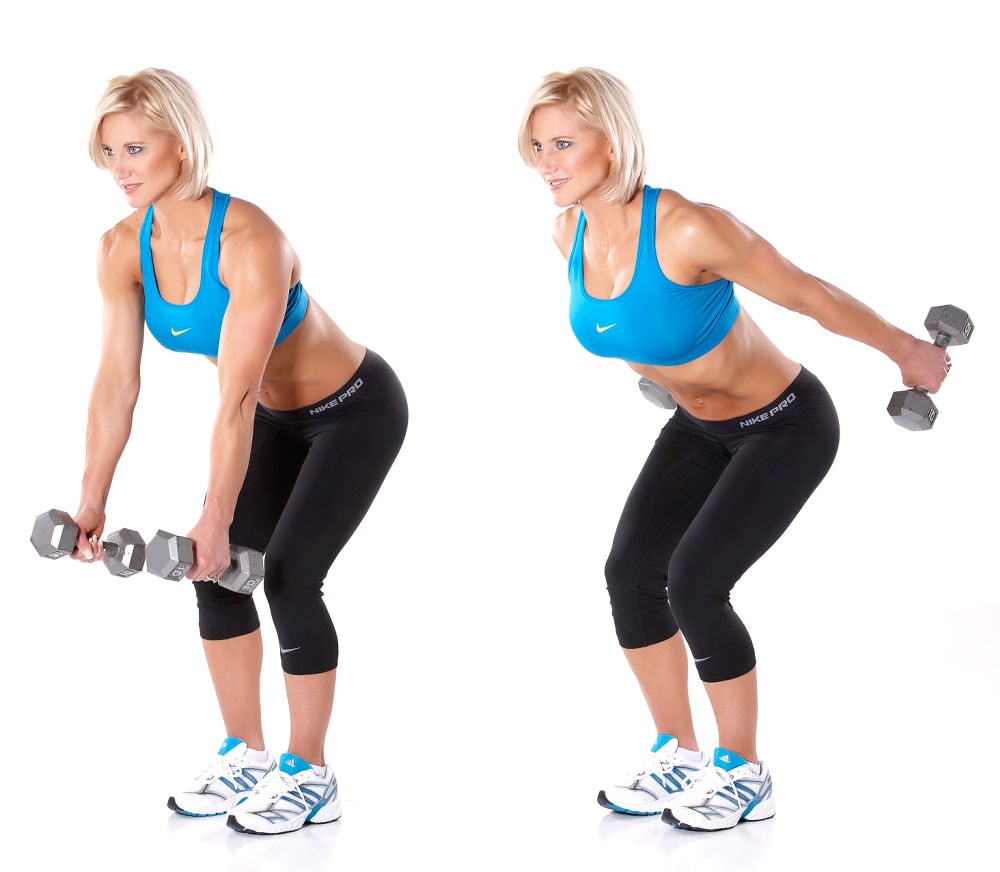
The delt skier kickback, sometimes called a straight-arm dumbbell kickback, is a rear-shoulder exercise performed from a bent-over position. You hold a dumbbell in each hand with your arms hanging toward the floor, then move your straight arms backward until they reach or pass the line of your torso.
The exercise looks similar to a dumbbell triceps kickback at the finish, but the joint action is different. During a triceps kickback, the upper arm stays relatively still while the elbow extends. During a delt skier kickback, the elbow stays nearly fixed while movement occurs primarily at the shoulder.
That distinction matters because the posterior deltoid can contribute to shoulder extension. The long head of the triceps and latissimus dorsi can also assist with this movement, so the exercise should not be described as completely isolating the rear delts.
How to Do Delt Skier Kickbacks
The easiest way to turn this into a different exercise is to start bending and straightening your elbows. Set a slight bend before the first rep and keep that angle almost frozen. Then think about moving your entire arm backward from the shoulder. If you need elbow motion or a big torso swing to finish the rep, use lighter dumbbells.

Delt Skier Kickback vs. Triceps Kickback
The two exercises can look similar because both may finish with the arms extended behind the torso. The easiest way to distinguish them is to watch which joint is moving.
In a triceps kickback, the upper arm remains relatively stationary while the elbow moves from flexion toward extension. The triceps are responsible for extending the elbow.
In the delt skier kickback, the elbow angle remains nearly constant. The entire arm travels backward at the shoulder, making shoulder extension the primary movement. The posterior deltoid contributes to this action, while other shoulder extensors can assist.
This is also why very heavy dumbbells can make the exercise less useful for its intended purpose. Once the elbows begin pumping or the torso starts swinging, you have changed the mechanics that distinguish the skier kickback from other exercises.
What Muscles Does the Delt Skier Kickback Work?
The posterior portion of the deltoid is the primary target of the delt skier kickback. The posterior deltoid contributes to moving the upper arm behind the body and is commonly trained with exercises involving shoulder extension and horizontal abduction.
The latissimus dorsi and long head of the triceps can also contribute to shoulder extension. Muscles of the upper back and rotator cuff help control the shoulder and shoulder blade while your trunk muscles maintain the bent-over position.
See the full muscle breakdown
- Posterior deltoid: The rear portion of the shoulder contributes to moving the upper arm backward behind the torso.
- Latissimus dorsi: Assists shoulder extension as the upper arm travels behind the body.
- Long head of the triceps: Crosses the shoulder joint and can assist shoulder extension even when there is little movement at the elbow.
- Upper-back and shoulder stabilizers: Help control the shoulder blades and upper-arm position throughout the repetition.
- Core and spinal stabilizers: Work isometrically to help maintain the bent-over skier position while the arms move.
Sets and Reps
The delt skier kickback works best with a load you can move without changing the elbow angle or swinging your torso. Because the arms create a relatively long lever, light dumbbells can provide plenty of resistance.
| Goal | Sets | Reps |
|---|---|---|
| Learning the movement | 2 | 8 to 10 |
| Rear-delt accessory work | 3 to 4 | 10 to 15 |
| Higher-rep shoulder work | 2 to 3 | 15 to 20 |
Rest about 45 to 90 seconds between sets. A brief controlled pause at the top can make light dumbbells more challenging without changing the movement. Add weight only when you can maintain the same elbow angle and torso position throughout the set. See my guide to progressive overload for women for more ways to progress your training.
Delt Skier Kickback Variations and Modifications
Single-Arm Delt Skier Kickback
Perform the exercise one arm at a time and use your free hand to support yourself on a bench. The added support can make it easier to keep your torso still and concentrate on shoulder movement.
Chest-Supported Straight-Arm Kickback
Lie face down on an incline bench and perform the same straight-arm shoulder-extension motion. Supporting your chest reduces the amount of work required to hold the bent-over torso position.
Cable Straight-Arm Kickback
Use a low cable instead of a dumbbell to maintain resistance through more of the movement. Keep the elbow nearly fixed so the motion continues to come primarily from the shoulder.
Reverse Dumbbell Fly
A reverse fly moves the arms outward rather than primarily backward. Both can train the posterior deltoids, but the shoulder movement and resistance profile are different.
Band Pull Apart
For a standing rear-shoulder option, try band pull aparts. The movement uses horizontal shoulder abduction and scapular motion instead of the shoulder-extension pattern used here.
Common Delt Skier Kickback Mistakes to Avoid
- Turning it into a triceps kickback. Keep the elbow angle nearly fixed instead of repeatedly bending and straightening your arms.
- Using too much weight. Heavy dumbbells often cause torso swinging, elbow movement, and a shortened shoulder range. Use a load you can control.
- Throwing the weights backward. Move deliberately from the shoulder rather than using momentum to create the finishing position.
- Forcing the arms excessively high. Stop at your controlled shoulder-extension range rather than trying to lift the dumbbells as far above your torso as possible.
- Letting the weights fall forward. Control the return instead of allowing gravity to pull your arms rapidly toward the floor.
Delt Skier Kickback FAQs
What muscles do delt skier kickbacks work?
Delt skier kickbacks primarily target the posterior deltoid at the back of the shoulder. The latissimus dorsi and long head of the triceps can also assist with shoulder extension. Muscles around the shoulder blade help control the shoulder complex while your trunk muscles maintain the bent-over position. The exercise is therefore rear-delt focused rather than a completely isolated posterior-deltoid movement.
Is a delt skier kickback the same as a triceps kickback?
No. The two exercises can look similar at the end of the repetition, but the primary joint movement is different. During a triceps kickback, the elbow bends and straightens while the upper arm stays relatively still. During a delt skier kickback, the elbow stays nearly fixed while the entire arm moves backward at the shoulder.
Are delt skier kickbacks good for rear delts?
Delt skier kickbacks can be used as a rear-deltoid accessory exercise because the posterior deltoid contributes to moving the upper arm backward. Other muscles can assist with shoulder extension, so the movement does not isolate the posterior deltoid completely. Use light enough dumbbells to keep the movement at the shoulder instead of relying on elbow motion or momentum. Rear-delt training can also include rows, reverse fly variations, and band exercises.
Should my arms stay straight during delt skier kickbacks?
Keep a slight comfortable bend in your elbows rather than forcefully locking them straight. The important point is that the elbow angle remains nearly unchanged throughout the repetition. If your elbows repeatedly bend and straighten, the movement begins to resemble a triceps kickback. Think about moving the entire arm backward from the shoulder.
How heavy should delt skier kickbacks be?
Delt skier kickbacks usually work best with relatively light dumbbells because your arms create a long lever against the shoulder. Choose a load that allows you to keep your torso still and your elbow angle nearly fixed. If you have to swing the weights or bend your elbows to finish the repetition, reduce the weight. Increase resistance gradually once you can control your target repetition range.
How far should I lift my arms behind me?
Move through the shoulder-extension range you can control comfortably without forcing the arms higher. Your individual range will depend on your shoulder mobility and anatomy. Stop when further movement would require your torso to change position or your elbows to bend. The goal is controlled shoulder movement rather than achieving a specific dumbbell height.
Are delt skier kickbacks safe or good for women over 40?
Delt skier kickbacks can be a useful rear-shoulder exercise for women over 40 who can comfortably maintain the bent-over position and move their shoulders through the required range. Age alone does not determine whether the exercise is appropriate. Start with light dumbbells and avoid forcing the arms farther behind the body than your shoulders comfortably allow. Persistent shoulder or back pain should be assessed rather than trained through.
References
- Schoenfeld, Brad J., et al. “Effect of Hand Position on EMG Activity of the Posterior Shoulder Musculature During a Horizontal Abduction Exercise.” Journal of Strength and Conditioning Research, vol. 27, no. 10, 2013, pp. 2644-2649. doi.org/10.1519/JSC.0b013e318281e1e9. This study examined posterior-deltoid and other shoulder-muscle activity during reverse-fly horizontal abduction. It supports posterior-deltoid involvement in rear-shoulder exercise but did not test the delt skier kickback.
- Kang, Min-Hyeok, Jae-Seop Oh, and Jun-Hyeok Jang. “Differences in Muscle Activities of the Infraspinatus and Posterior Deltoid during Shoulder External Rotation in Open Kinetic Chain and Closed Kinetic Chain Exercises.” Journal of Physical Therapy Science, vol. 26, no. 6, 2014, pp. 895-897. doi.org/10.1589/jpts.26.895. Fifteen healthy men were studied using EMG during shoulder external-rotation conditions. The study helps illustrate that posterior-deltoid recruitment varies with shoulder exercise mechanics and did not test skier kickbacks.
Train With An Expert
Want a Plan Built Around You?
I’m Julie Lohre, an IFBB Fitness Pro and certified personal trainer and nutrition specialist. For more than 20 years I have helped women over 40 get stronger, leaner, and more confident through personalized online coaching built around their real lives.