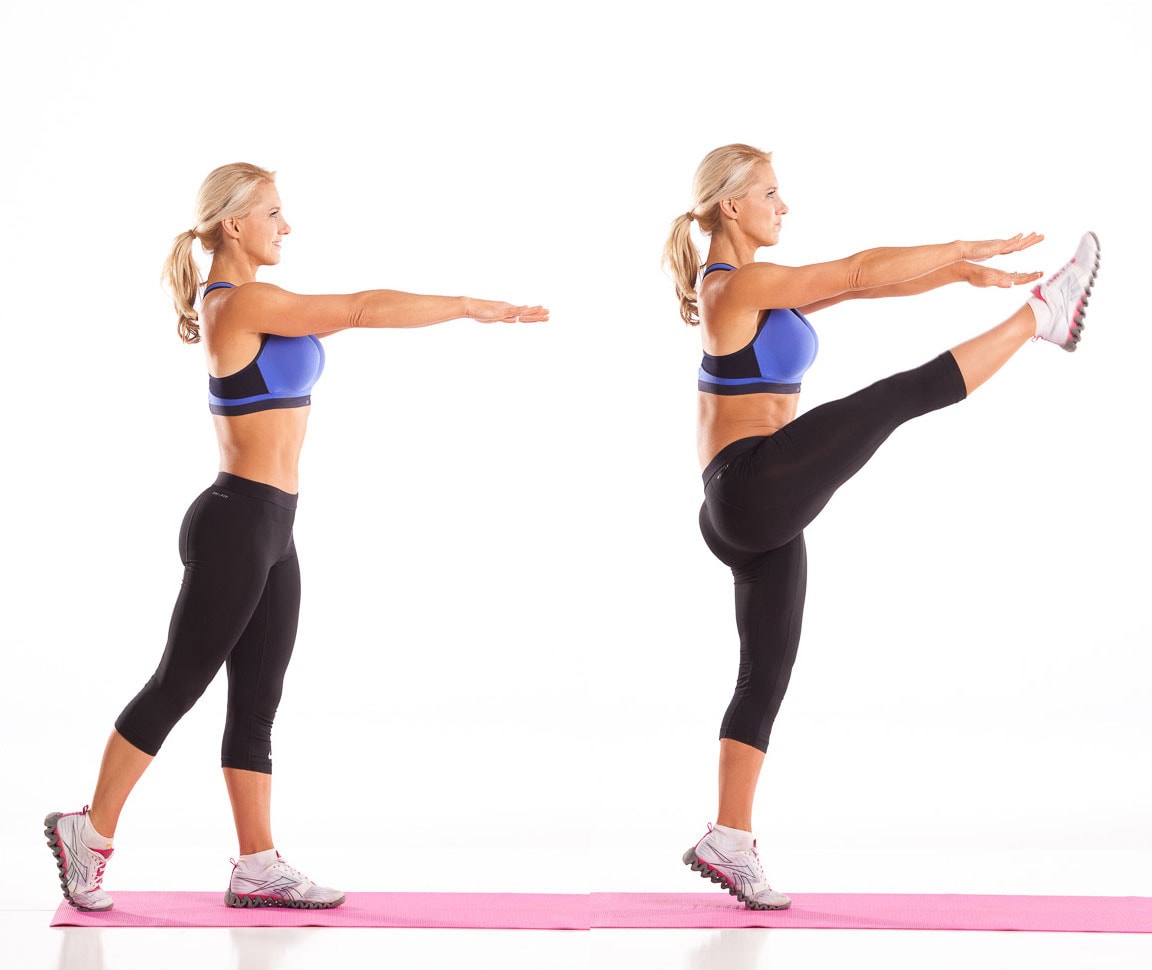
High Kick

High Kicks

How to Do High Kicks for Flexibility, Core Strength, and Dynamic Balance

Watch this High Kick exercise demo for women over 40 to improve hip mobility, core engagement, and hamstring flexibility. A perfect dynamic warm-up move for leg day, running, or full-body training.

What are High Kicks?

High Kicks are a dynamic movement that challenges balance, coordination, and flexibility. You swing one leg straight up in front of you while keeping your core tight and back tall. This exercise is often used as part of a warm-up or mobility series, but when performed with control, it can strengthen the core, activate the hip flexors, and loosen up tight hamstrings all at once.

High Kicks are ideal for women over 40 because they wake up the lower body and improve functional movement without placing unnecessary stress on the joints.


High Kick

Muscles Worked in High Kicks

  • Hamstrings (lengthening through dynamic stretch)
  • Hip flexors (lifting the leg)
  • Core (stabilizing the spine)
  • Glutes (supporting the standing leg)
  • Quadriceps (especially the rectus femoris on the kicking leg)

How to Do High Kicks with Proper Form

  1. Stand tall with arms extended straight out in front of you, palms facing down.
  2. Engage your core and lift your chest—avoid slouching forward.
  3. Swing one leg up toward your extended arms, aiming to kick as high as your flexibility allows without forcing it.
  4. Keep the leg as straight as possible, but avoid locking out the knee.
  5. Control the movement back down and repeat on the other side. If you choose, you can make this a moving high kick propelling yourself forward with each step.
  6. Perform 10 to 12 reps per leg as part of your warm-up or mobility circuit.

Common Mistakes to Avoid

  • Leaning back as you kick, which puts stress on the lower back
  • Over-kicking beyond your flexibility range
  • Rushing through reps without control
  • Dropping your arms instead of keeping them steady for alignment

Why I Use High Kicks in My Training Plans

High Kicks may look simple, but they’re incredibly effective at opening up the hips and hamstrings—areas that tend to tighten up with age or long periods of sitting. I include these regularly in my warm-ups for clients over 40 to help prevent injury and improve movement quality. If you’re preparing for a lower-body workout or just need to shake off stiffness, this is one of my go-to moves.

How To Do High Kicks

High Kick Frequently Asked Questions

Can I do High Kicks if I have tight hamstrings?

Absolutely—and it’s actually one of the best reasons to start. If your hamstrings feel stiff or limited, High Kicks give you a dynamic, movement-based way to gradually increase flexibility without forcing a static stretch. The key is to begin with a smaller range of motion. Aim for control, not height. As your mobility improves and your muscles adapt, you’ll naturally be able to kick higher. For women over 40, this kind of progressive movement is especially helpful for improving circulation, joint function, and overall mobility over time.


Is this a strength or a stretch exercise?

High Kicks fall into the category of dynamic stretching, but they also build strength—especially in the hip flexors, core, and stabilizing muscles of the lower body. Each controlled kick requires your abdominals and standing leg to stay engaged while your kicking leg drives upward. So while it’s not heavy strength training, you’re still building neuromuscular control and joint stability. It’s a great way to “activate” key muscle groups before lifting or cardio, which is why I include it often in warm-up routines.


What’s the difference between High Kicks and Leg Swings?

While they may look similar at first glance, High Kicks and Leg Swings serve different purposes. High Kicks are more structured—you keep your upper body tall, arms extended, and perform each kick with intention and control. The goal is activation and alignment. Leg Swings, on the other hand, are looser and often done for joint mobility. You might use them to loosen up your hips by swinging your leg front-to-back or side-to-side, often using a wall for support. Both are useful, but High Kicks are better when you want targeted movement that preps you for strength work or running.


Should I do High Kicks before or after my workout?

High Kicks are best used before your workout as part of your dynamic warm-up. They get your blood flowing, activate key muscle groups, and help you move better going into your session. Doing them before strength training or cardio can improve range of motion and reduce injury risk. After your workout, your body needs more of a cool-down and recovery mode—so that’s the time for slower, static stretches to relax and lengthen the muscles you’ve just worked. Use High Kicks to prepare, not to recover.

High Kick Exercise

Final Tips

Start slow and focus on form. Exhale as you kick to help naturally brace your core. Think tall spine, lifted chest, and controlled movement.

You don’t need to be extreme—just consistent. Add this to your weekly routine and you’ll notice improved mobility, better control, and smoother workouts.