FITBODY · Fat Loss for Women
How to Lose Lower Belly Fat for Women
You are eating well, training hard, and watching every other part of your body change, yet the lower belly holds on like it has a mind of its own. After 40 it absolutely does, and the reason is biological, not a lack of willpower. Here is why the lower belly is the most stubborn area on a woman’s body, and the exact nutrition, strength, and daily habits that finally lean it out.
In This Article
If you have been doing the work and the lower belly is the one place that will not budge, you are not imagining it. After coaching thousands of women through this exact frustration, I can tell you the lower belly is the most stubborn area on the female body, and it is for real biological reasons, not because you are doing something wrong.
To lose lower belly fat, women need a mild calorie deficit with protein at around 30 percent of calories, progressive strength training that builds the muscle underneath the fat, two to three short, intense cardio sessions each week, and enough daily steps to lift overall activity. You cannot spot reduce the area, so the lower belly leans out as your total body fat comes down, and for most women it is one of the last places to change. The plan that gets you there is steady and sustainable, not extreme.
What Lower Belly Fat Actually Is
Lower belly fat is a mix of two things. Subcutaneous fat sits just under the skin and is the soft layer you can pinch. Visceral fat sits deeper, around the organs in the abdominal cavity, and too much of it is linked to inflammation and a higher risk of heart disease and diabetes. So leaning out your midsection is not only about how you look in your clothes. It is one of the most protective changes you can make for your long term health.
Here is the part most women are never told. For women, where fat sits and how easily it comes off is shaped heavily by hormones and by the fat cells themselves, especially in the lower belly, hips, and thighs. That is why the area behaves differently from your arms or your face, and why it needs a more strategic approach rather than just doing more.
Why Lower Belly Fat Is So Hard to Lose for Women
While genetics decide a lot about where your body stores fat, specific biological factors make the belly, hips, thighs, and love handles especially hard to slim. Most of it comes down to the fat cells themselves and the hormones that signal them.
Alpha and Beta Fat Receptors
Your fat cells carry two kinds of receptors that control whether fat is stored or released, alpha and beta receptors. Fat cells rich in alpha receptors resist fat breakdown and hold on to fat longer. The lower belly, hips, thighs, and glutes are dense with alpha receptors, which is exactly why these areas stay put even when you are dieting and training hard. Beta receptors do the opposite. They respond well to fat burning signals, so areas with more of them, like the upper body, arms, and lower legs, tend to lean out first. That is why your face and arms often look leaner while the lower belly seems untouched.
Reduced Blood Flow to the Belly
The same stubborn areas also tend to have lower blood flow. When circulation to the stomach and thighs is limited, it is harder for the body to move fatty acids out of those cells and into the bloodstream to be burned for energy. So the fat in these regions is both less willing to release and less accessible once it does.
Hormonal Shifts for Women Over 40
Hormones drive a great deal of this, especially for women. Estrogen influences where fat is stored, and as levels fluctuate through perimenopause and menopause, the body shifts more fat toward the belly. Add in a natural drop in muscle and a slower metabolism, and the midsection becomes even more resistant. If menopause is a big part of your picture, I go much deeper on the hormonal side in my guide on how to lose weight during menopause.
Understanding alpha and beta receptors, blood flow, and hormones explains why the lower belly resists your best efforts. It does not mean fat loss here is impossible. It means the approach has to be smarter than cutting calories and adding cardio.
How to Lose Lower Belly Fat: 6 Strategies That Work
Your body has its patterns, but those patterns are not a life sentence. You can lean out your lower belly with the right mix of nutrition, training, and consistency. Here is where most women go wrong: they slash calories too low, overdo cardio, skip strength training, and ignore the role of protein and muscle. These six strategies fix that.
Struggling with belly fat over 40? Here is why, and what actually works.
Make Macros the Priority
If you are not paying attention to your macros, you are flying blind. To lose stubborn belly fat, aim for at least 30 percent of your calories from protein. For women in their 40s and 50s, higher protein protects muscle and keeps your metabolism working, which makes fat loss more efficient. On busy days, a quality protein powder makes hitting that target far easier. Rather than cutting calories drastically, eat in a mild deficit and keep fueling your training.
Progress Your Core Work
You do not need endless crunches to see ab definition. Focus on movements that load the core in a progressive way, like weighted planks, hanging leg raises, and cable crunches. These build the muscle that gives your midsection shape once body fat comes down, and they bring more blood flow to a stubborn area.
Choose Quality Over Quantity
More is not always better. Overtraining leads to burnout and can stall progress. Put your energy into quality, both in your workouts and on your plate. Build meals around protein, healthy fats, and fiber, and keep richer foods as an occasional treat meal rather than a daily habit.
Expect Fat Loss to Be Nonlinear
Fat loss comes with ups, downs, and plateaus. Do not panic when the scale stalls, it is normal. Stay consistent, and when it makes sense, use a short diet break to let your body settle at its new normal. That patience prevents the burnout and rebound that derail so many women.
Cut Back on Hyper-Palatable Foods
Hyper-palatable foods like chips, fast food, and sugary snacks override your natural fullness signals and drive overeating. They also disrupt hormones like leptin and insulin that influence belly fat. Swap them for whole, nutrient dense options, lean proteins, healthy fats, and fiber rich vegetables, to steady your appetite and your blood sugar.
Rethink Alcohol
Alcohol adds empty calories and slows fat burning while nudging your body toward storing fat around the middle. If leaning out your lower belly is the goal, pull alcohol back. Keep it to one or two drinks a week, skip the sugary mixers, and hydrate well.
One supplement most women over 40 are not using, but could benefit from, is stimulant free metabolic support like 7-Keto MuscLean. It is not a magic bullet, and nothing replaces consistent training and nutrition, but for women fighting age related fat gain it may support metabolism and help steady cravings while you hold a sensible deficit.
Best Exercises to Lose Lower Belly Fat
You cannot spot reduce, so no single move melts belly fat. What the right training does is burn overall body fat, build the muscle underneath, and bring shape to your midsection as you lean out. This is the combination I use with my clients.
Short, Intense Cardio
Cardio is one of the most effective tools for fat loss, and for the belly in particular. If you want results without living on a treadmill, I favor high intensity interval training and sprint interval training. Both alternate hard bursts with recovery, so you burn more in less time and keep your metabolism elevated after the session ends.
Strength Training First
Strength training is what gives you lean, defined abs to reveal once the fat comes off. Without it, you risk losing muscle as you diet, which makes definition harder to see and slows your metabolism. I recommend full body strength work four to five times a week, at least 30 minutes a session. Compound lifts like squats, deadlifts, and overhead presses challenge your core while building everything else, then you layer in direct ab work.
Core Stability Work
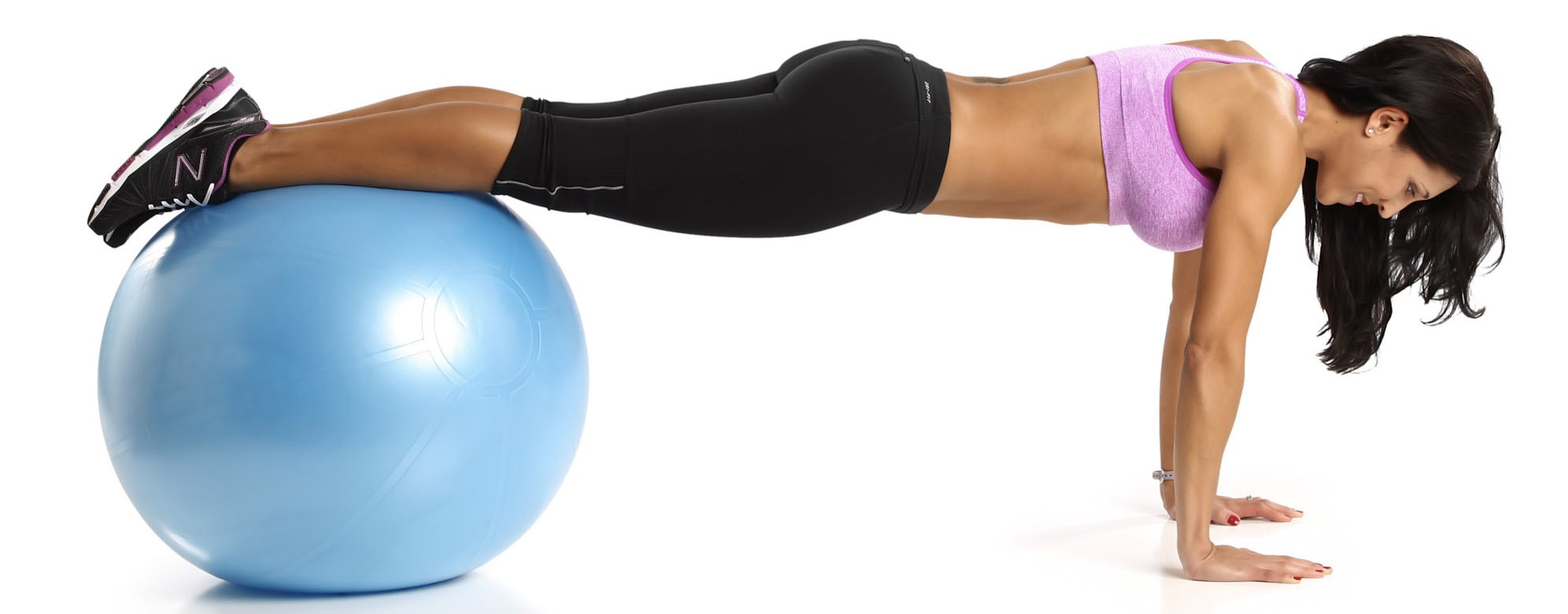
Your core is far more than the six pack muscle on the surface. Stability movements that engage the deep core, like planks, side planks, bird dogs, and the Russian twist, tighten your waistline, protect your spine, and make every other lift more effective. Strong, stable core muscles help you look leaner and move better.
Daily Steps and NEAT
One of the most overlooked pieces is non exercise activity, all the calories you burn walking, standing, and moving through your day. Adding steps, taking the stairs, and walking after meals adds up far more than most women expect. For many over 40, being intentional about daily movement outside of workouts is the missing piece. You can estimate your daily burn here.
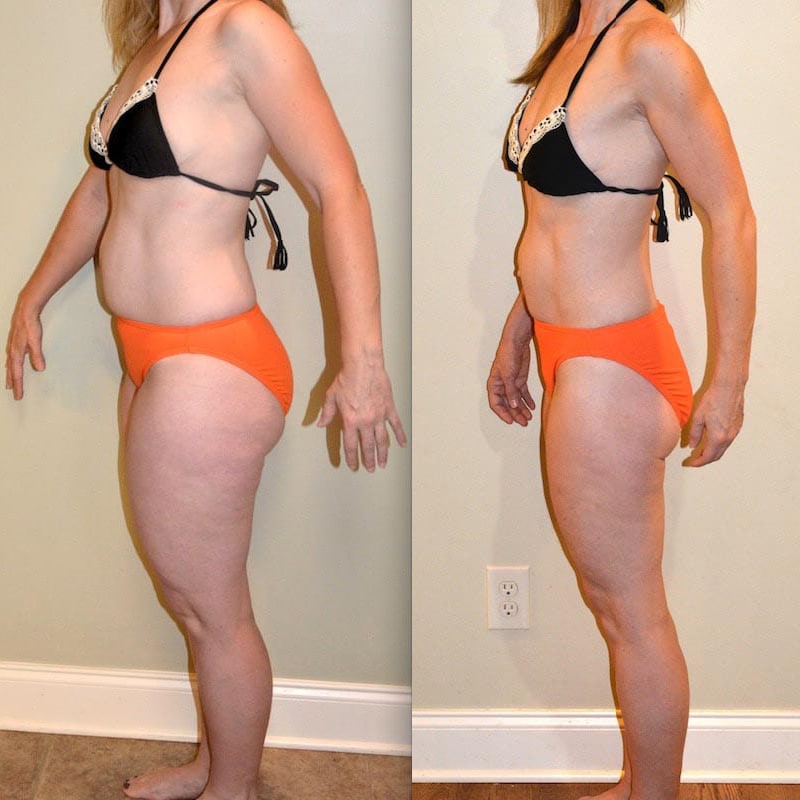
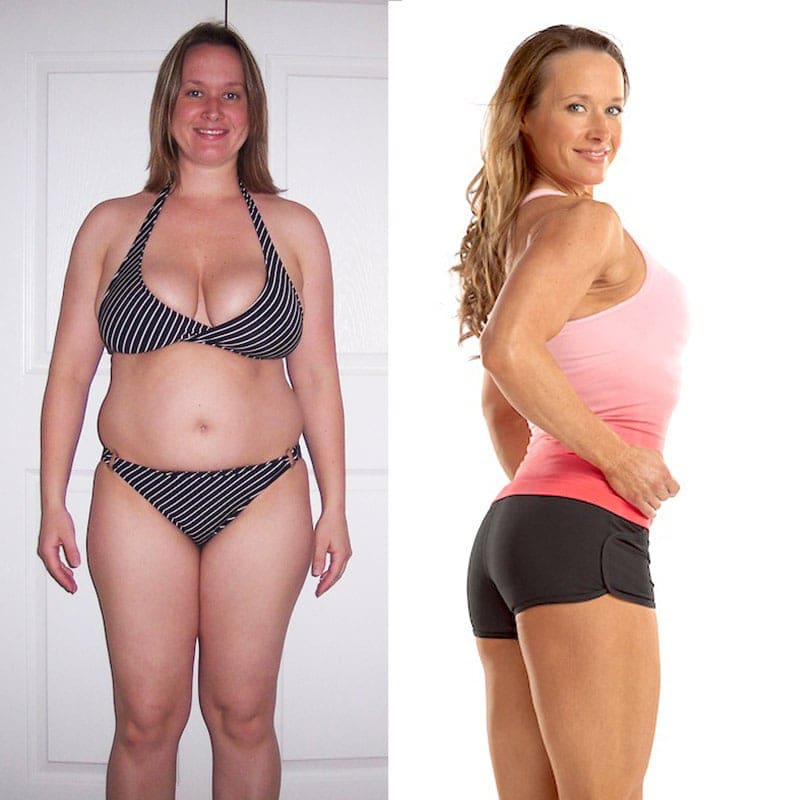
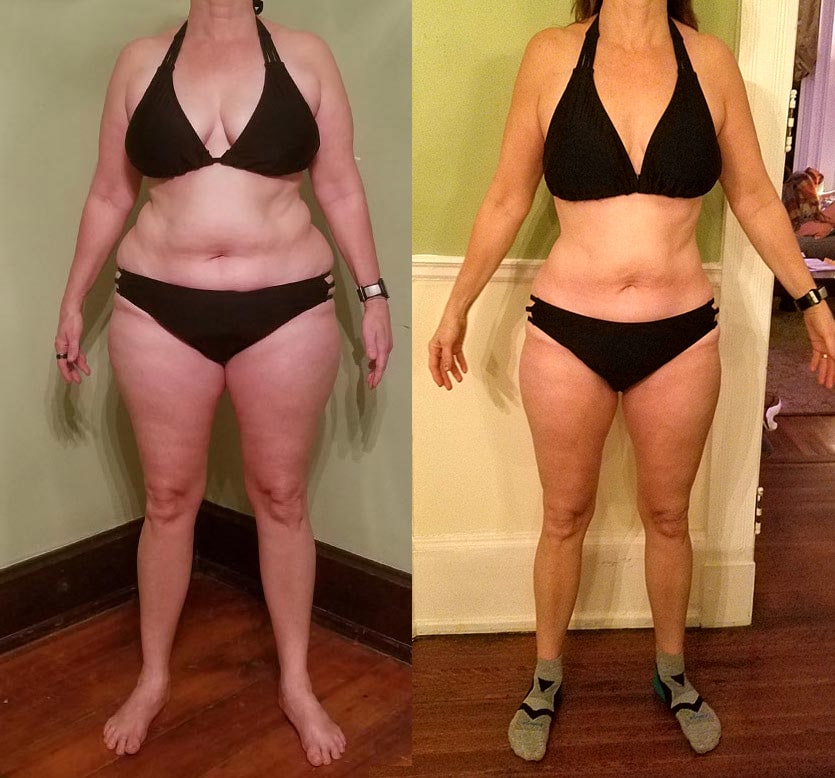
Lower Belly Fat Transformations
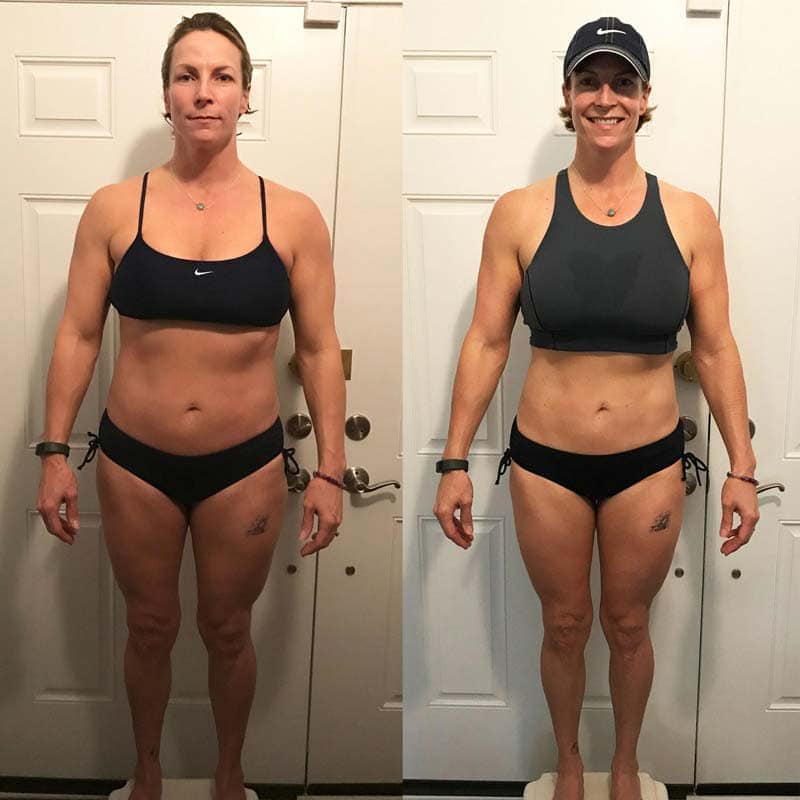
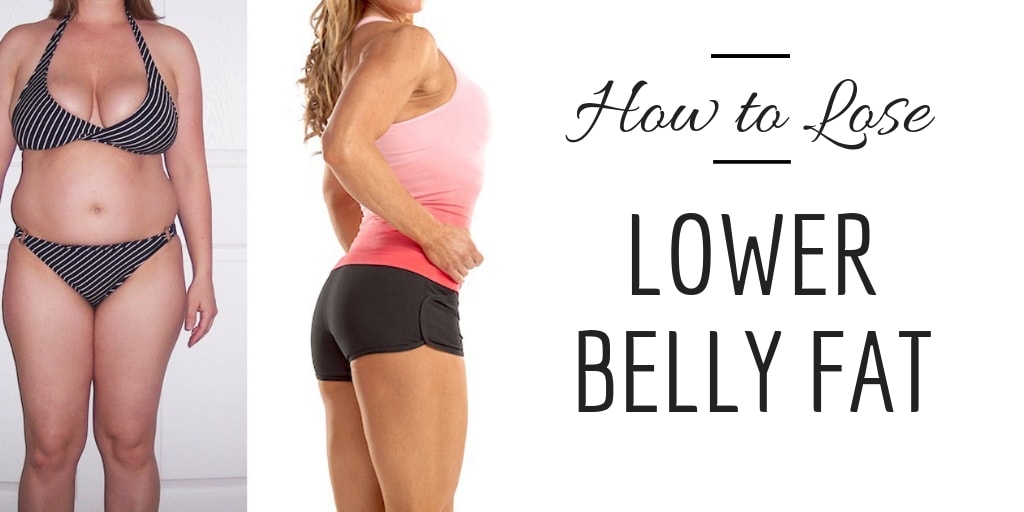
This is what the combination looks like in real women who stayed consistent. No drugs, no extremes, just structured training, strategic nutrition, and time.
Renee, down 40 pounds and 7 inches off her waist
At 53, her lower belly leaned out as her whole body fat came down through my FITBODY Recomposition System™. Read her story.
Jenna leaned out her midsection and built core strength
Consistent training and a nutrition plan built around her did it, no extremes, through my FITBODY Recomposition System™. Read her story.
Courtney, 4 inches off her lower belly
Structured strength training and strategic nutrition with my FITBODY Recomposition System™. Read her story.
Mylena, down 15 pounds and 3 inches off her waist at 42
This busy mom of six also lost 5 inches off her hips over 16 weeks with my FITBODY Recomposition System™. Read her story.
See more real results in my FITBODY transformations.
The Good News: You Can Lean Out Your Lower Belly
No exercise melts belly fat overnight, and spot reduction is not real. But when you combine smart nutrition, the right training, and daily movement, your body responds. The lower belly may be the last place to lean out, but if you stay the course, it follows. I tell my clients all the time, you do not need to be extreme, just consistent. Think of it this way: nutrition lowers the curtain, cardio pulls it back further, and strength training reveals the muscle that has been there all along.
Reignite Your Metabolism After 35
If your lower belly will not budge no matter how clean you eat, a slow metabolism is often the missing piece. This is the free guide I give women over 40 who want to understand what is actually working against them, and how to turn it back around.
- Why eating less and training more stops shifting belly fat after 40
- The simple changes that rebuild a slow metabolism naturally
- How to train and eat for fat loss without burning out
Frequently Asked Questions About Losing Lower Belly Fat
Why is belly fat so hard to lose for women over 40?
Belly fat is stubborn because of a combination of biology, hormones, and blood flow. Fat cells in this area have more alpha receptors, which slow fat release, and fewer beta receptors, which speed it up. Blood flow to the stomach is also lower, so stored fat is less available for energy. Add the hormonal shifts of perimenopause and menopause, especially lower estrogen, and your body becomes more likely to store fat in the abdomen. It is not that you are doing anything wrong, it is that your physiology needs a more strategic approach.
Can I target belly fat with specific exercises?
You cannot spot reduce fat from one area, but you can strengthen and build the muscle underneath while lowering body fat overall. For women over 40, the most effective approach is progressive strength training, core focused movements like weighted planks or hanging leg raises, and adequate protein. These improve muscle tone, increase blood flow to stubborn areas, and support total fat loss, so the lower belly eventually leans out.
Does menopause make belly fat worse?
Yes, and it is not your imagination. During menopause, estrogen levels drop and your body shifts to storing more fat around the abdomen instead of the hips and thighs. This is also tied to reduced muscle and a slower metabolism, which makes fat easier to gain and harder to lose. Strength training, higher protein, and consistent movement offset much of this shift and help you keep a leaner midsection well into your 50s and beyond.
How much does nutrition really matter for losing belly fat?
For most women, nutrition drives the majority of fat loss results. Eating in a mild calorie deficit, hitting protein at about 30 percent of your calories, and limiting hyper-palatable processed foods all work together to improve insulin sensitivity and reduce belly fat storage. Fad diets can produce quick drops on the scale, but a macro based approach ensures you lose fat while preserving muscle, which is what makes the result last.
Will cutting out carbs help me reduce belly fat faster?
Not necessarily. Reducing refined carbs and added sugars can help control blood sugar and cravings, but you do not need to eliminate carbs completely. Complex carbs like oats, quinoa, and sweet potatoes give you steady energy for workouts and help prevent the muscle loss that slows your metabolism. The key is balancing carbs with protein and healthy fats so your blood sugar stays stable and your body taps into stored fat more effectively.
Why does my weight drop everywhere except my stomach?
Your body loses fat in a genetically determined order, and for women the lower belly is almost always one of the last areas to change. It does not mean your plan is failing, it means you are in the later stages of fat loss. The stomach usually leans out after the face, arms, and legs have already changed. Patience and consistency matter most here, because if you stay the course, the lower belly follows.
How long will it take to lose belly fat?
It depends on how much fat you have to lose, your consistency, and your overall approach. For many women over 40, noticeable changes in the lower belly take three to six months of consistent nutrition, strength training, and recovery, sometimes longer if you have been in a calorie deficit for years. The fastest progress comes from a steady, sustainable plan that avoids extreme restriction, so your body feels safe enough to keep burning fat over time.
What are the best exercises to lose lower belly fat?
The best results come from combining progressive strength training, deep core stability work, and short, intense cardio. Full body lifts like squats and deadlifts build muscle and burn fat, core moves like planks, side planks, and hanging leg raises shape the midsection, and interval cardio burns fat in less time. Paired with daily steps and adequate protein, this mix lowers overall body fat so the lower belly leans out, which no amount of crunches alone can do.
Your Story Could Be Next
Your strongest body is still ahead of you. Let’s build it together.
Julie Lohre is an IFBB Fitness Pro, Certified Personal Trainer, and Certified Nutrition Specialist with 20+ years of experience coaching women over 40 to lose fat, build lean muscle, and transform their bodies through my FITBODY Recomposition System™. The women on this page did not find a shortcut. They found a real system, built around their real lives, and they stayed consistent. If their results sound like the change you have been waiting for, your time is now.
Scientific Research
Arner, Peter, et al. “Adipocyte Lipolysis and Hormone-Sensitive Lipase in Men and Women.” Journal of Clinical Endocrinology and Metabolism, vol. 83, no. 6, 1998, pp. 1886-1891.
Lafontan, Max. “Adipose Tissue and Lipid Mobilization: Overview of Fat Cell Lipolysis.” Progress in Lipid Research, vol. 53, 2014, pp. 10-42.
Nicklas, Barbara J., et al. “Sex Differences in the Response of Visceral Adipose Tissue and Skeletal Muscle Fat to Exercise Training in Overweight Adults.” American Journal of Physiology-Endocrinology and Metabolism, vol. 281, no. 2, 2001, pp. E282-E289.
Palmer, Brian F., and Deborah J. Clegg. “The Sexual Dimorphism of Obesity.” Molecular and Cellular Endocrinology, vol. 402, 2015, pp. 113-119.
Tchoukalova, Yourka D., et al. “Regional Differences in Adipocyte Size and Lipolysis in Obese Women.” Metabolism: Clinical and Experimental, vol. 53, no. 4, 2004, pp. 453-460.