FITBODY Exercise Library · Glutes and Conditioning
Kettlebell Swings
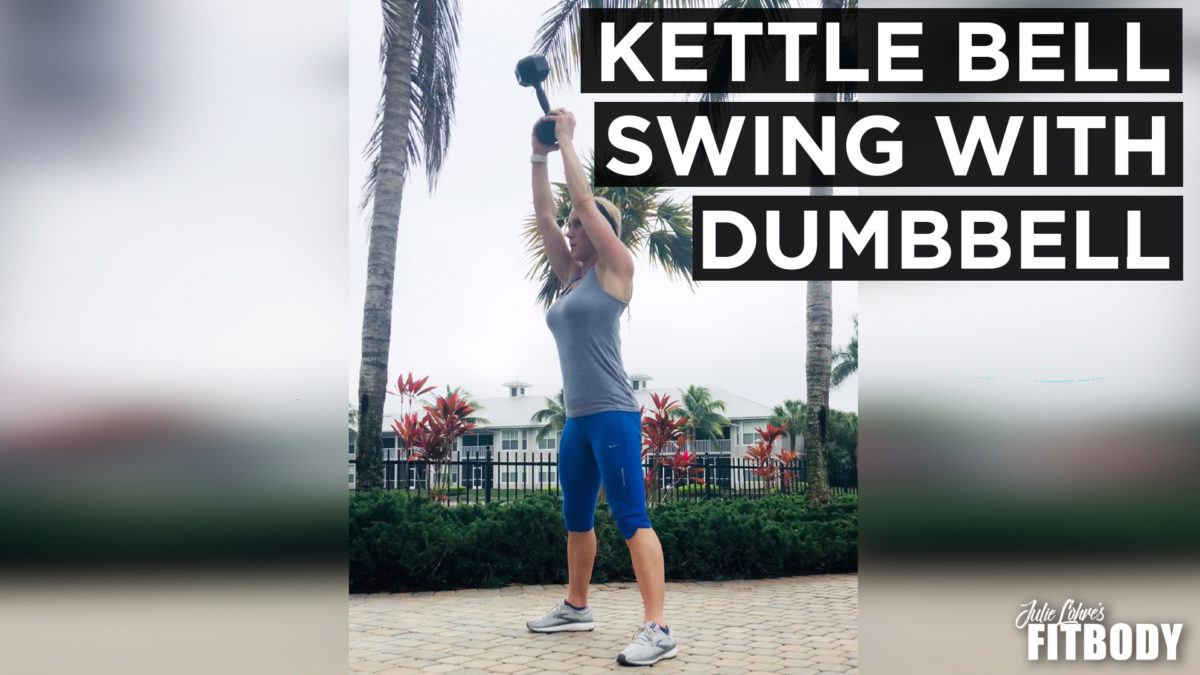
The kettlebell swing builds powerful glutes, strong hamstrings, and real conditioning through one explosive hip hinge. No kettlebell at home? The kettle bell swing with dumbbell modification gives you the same movement with the weight you already own.
How to Do a Kettlebell Swing
A swing is a hip snap, not a front raise. If your shoulders are doing the lifting, lighten the load and drive harder through your hips.


What Muscles Do Kettlebell Swings Work?
The kettlebell swing is a posterior chain movement, which means it trains the muscles along the back of your body that drive every strong hip hinge. The power comes from your glutes and hamstrings snapping your hips open, with your core and lower back holding everything stable. That hip-driven strength is exactly what carries over to the lifts and daily movement I build into my body recomposition coaching.
See the full muscle breakdown
- Gluteus maximus: drives the explosive hip extension that powers the bell up.
- Hamstrings: load in the hinge and assist your glutes in opening the hips.
- Core: braces hard to protect your spine and transfer force from your hips to the bell.
- Erector spinae (lower back): holds a flat, neutral back under a moving load.
- Shoulders and lats: guide and control the path of the bell as it floats up and back.
- Forearms and grip: hold the handle steady through fast, repeated reps.
- Quads: assist as you finish tall at the top of each swing.
Sets and Reps
Pick a weight you can control explosively for every rep, not the heaviest bell in the rack. Swings are about hip power and crisp form, so quality always comes before load.
| Goal | Sets | Reps |
|---|---|---|
| Power and strength | 4 to 6 | 10 to 15 |
| Conditioning and fat loss | 4 to 6 | 20 to 30 seconds |
| Beginner or returning | 2 to 3 | 8 to 10 |
Rest 45 to 60 seconds between hard sets. Move explosively on the way up and stay controlled on the way down. I program swings after the main strength lifts or as a finisher, not before heavy hinging when your hips are fresh.
Variations and Modifications
Kettle Bell Swing With Dumbbell Modification
No kettlebell at home? Hold a single dumbbell vertically by the top bell with both hands and swing it exactly like a kettlebell. The weight sits a little differently in your hands, so start lighter than you think and keep both palms wrapped securely around the head of the dumbbell.
Single Arm Swing
Swinging with one hand adds a real anti-rotation challenge for your core and a big demand on your grip. It is a great progression once your two-hand swing feels strong and smooth, and switching hands at the top keeps both sides balanced.
Russian Swing vs American Swing
The Russian swing stops at about chest height and is the version I coach for most of the women I work with, since it keeps the load off the shoulders. The American swing finishes overhead and asks for far more shoulder mobility and control, so I skip it for anyone with cranky shoulders. As your hips get stronger, progressive overload means adding weight to your swing before adding range you cannot control.
Want to keep building your hinge? Pair swings with the Romanian deadlift, hip thrusts, and good mornings for a complete posterior chain.

Common Mistakes to Avoid
- Squatting instead of hinging. If your knees travel forward and the bell dips low, you are squatting the swing. Push your hips back and keep most of the bend at your hips, not your knees.
- Lifting with your arms. The bell should float up from hip power, not a shoulder raise. Keep your arms relaxed and let your glutes do the work.
- Rounding your back. A flat, braced back protects your spine under a moving load. Brace your core before every rep and never let your lower back round at the bottom.
- Leaning back at the top. Finish tall with your ribs down and glutes squeezed. Hyperextending and leaning back stresses your lower back instead of loading your hips.
Kettlebell Swing FAQs
What muscles do kettlebell swings work?
Kettlebell swings are a posterior chain exercise that primarily work your glutes and hamstrings. The explosive hip snap is powered by your glutes, while your hamstrings load and assist in the hinge. Your core, lower back, shoulders, and grip all work hard to stabilize your spine and control the bell. That full hip-driven pattern is why swings build both strength and conditioning in one movement.
Can I do kettlebell swings with a dumbbell?
Yes, a dumbbell is a great substitute when you do not have a kettlebell. Hold one dumbbell vertically by the top bell with both hands wrapped securely around the head, then swing it from your hips exactly like a kettlebell. The weight balances a little differently in your hands, so start lighter than your usual kettlebell and focus on a secure grip. The kettle bell swing with dumbbell modification trains the same glutes, hamstrings, and core with equipment you likely already own.
Are kettlebell swings good for women over 40?
Kettlebell swings are an excellent choice for women over 40 because they build glute and hamstring strength, power, and conditioning with very little equipment. The hip hinge they teach carries directly into daily movement, lifting, and protecting your lower back. Research shows that several weeks of swing training can meaningfully improve maximal and explosive strength. The women I coach use swings to develop strong, capable hips that support the rest of their training.
How heavy should my kettlebell be?
Choose a weight you can move explosively with clean form for every rep, not the heaviest bell you can manage. Many women starting out do well with a kettlebell in the 8 to 16 kilogram range, but the right load depends on your strength and experience. The swing is driven by hip power, so a bell that is too heavy turns the movement into an arm lift and a squat. Master your form first, then add weight gradually as your hips get stronger.
Should I do the Russian or American kettlebell swing?
The Russian swing finishes at about chest height and is the version I coach for most women because it keeps the load off the shoulders. The American swing finishes overhead, which demands much more shoulder mobility and control and adds stress for anyone with shoulder issues. For building strong glutes and hamstrings, the Russian swing delivers nearly all of the benefit with far less risk. Start with the Russian swing, and only consider the overhead finish once your shoulders and form are fully ready.
References
- Lake, Jason P., and Mike A. Lauder. “Kettlebell Swing Training Improves Maximal and Explosive Strength.” Journal of Strength and Conditioning Research, vol. 26, no. 8, 2012, pp. 2228 to 2233, doi.org/10.1519/JSC.0b013e31825c2c9b.
- McGill, Stuart M., and Leigh W. Marshall. “Kettlebell Swing, Snatch, and Bottoms-Up Carry: Back and Hip Muscle Activation, Motion, and Low Back Loads.” Journal of Strength and Conditioning Research, vol. 26, no. 1, 2012, pp. 16 to 27.
Train With An Expert
Want a Plan Built Around You?
I’m Julie Lohre, an IFBB Fitness Pro and certified personal trainer and nutrition specialist. For more than 20 years I have helped women over 40 get stronger, leaner, and more confident through personalized online coaching built around their real lives.