FITBODY Exercise Library · Back & Upper Body
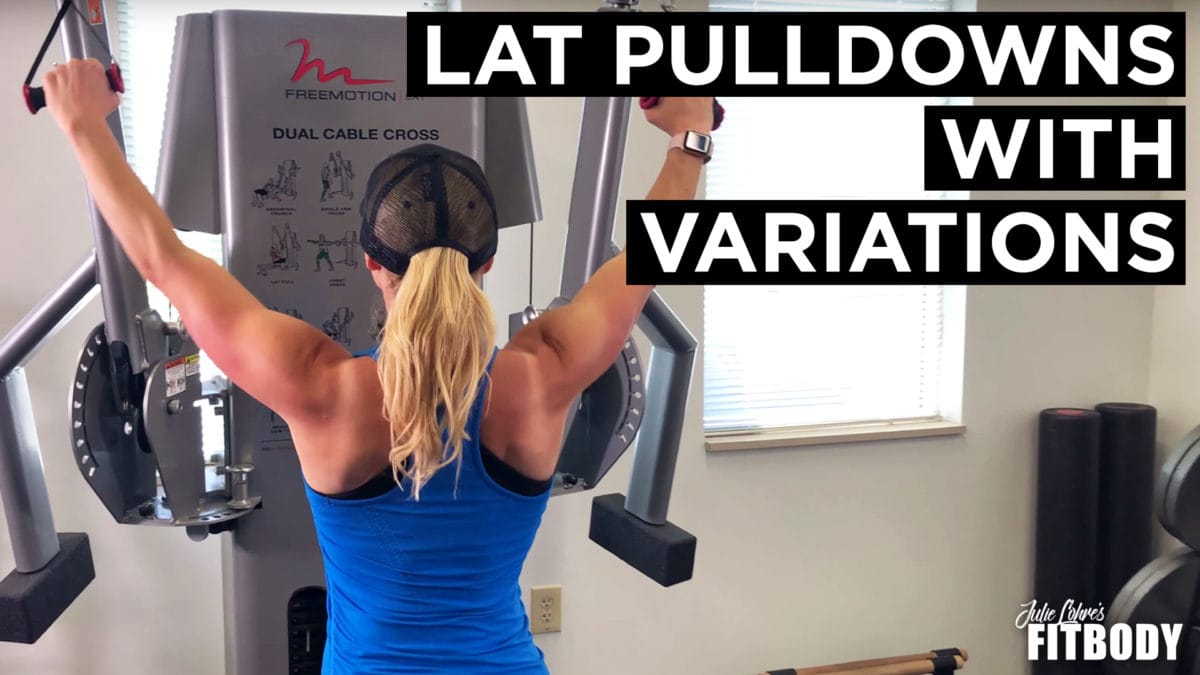
Lat Pulldowns
Lat pulldowns build a stronger, more defined back by targeting the latissimus dorsi, whether you use resistance bands at home or a cable machine at the gym. A staple exercise for posture, upper body strength, and that lean, athletic back.
Why Lat Pulldowns Matter for Women
Lat pulldowns target the upper back, specifically the latissimus dorsi, along with the biceps, forearms, rhomboids, and shoulder stabilizers. Strengthening these muscles improves posture, supports everyday movement, and builds a lean, sculpted upper body. For women over 40, direct pulling work is one of the smartest ways to counter the forward-rounded shoulder position that comes from desk work, phones, and years of daily stress on the upper body. It is one of the movements I lean on inside my FITBODY Recomposition System.
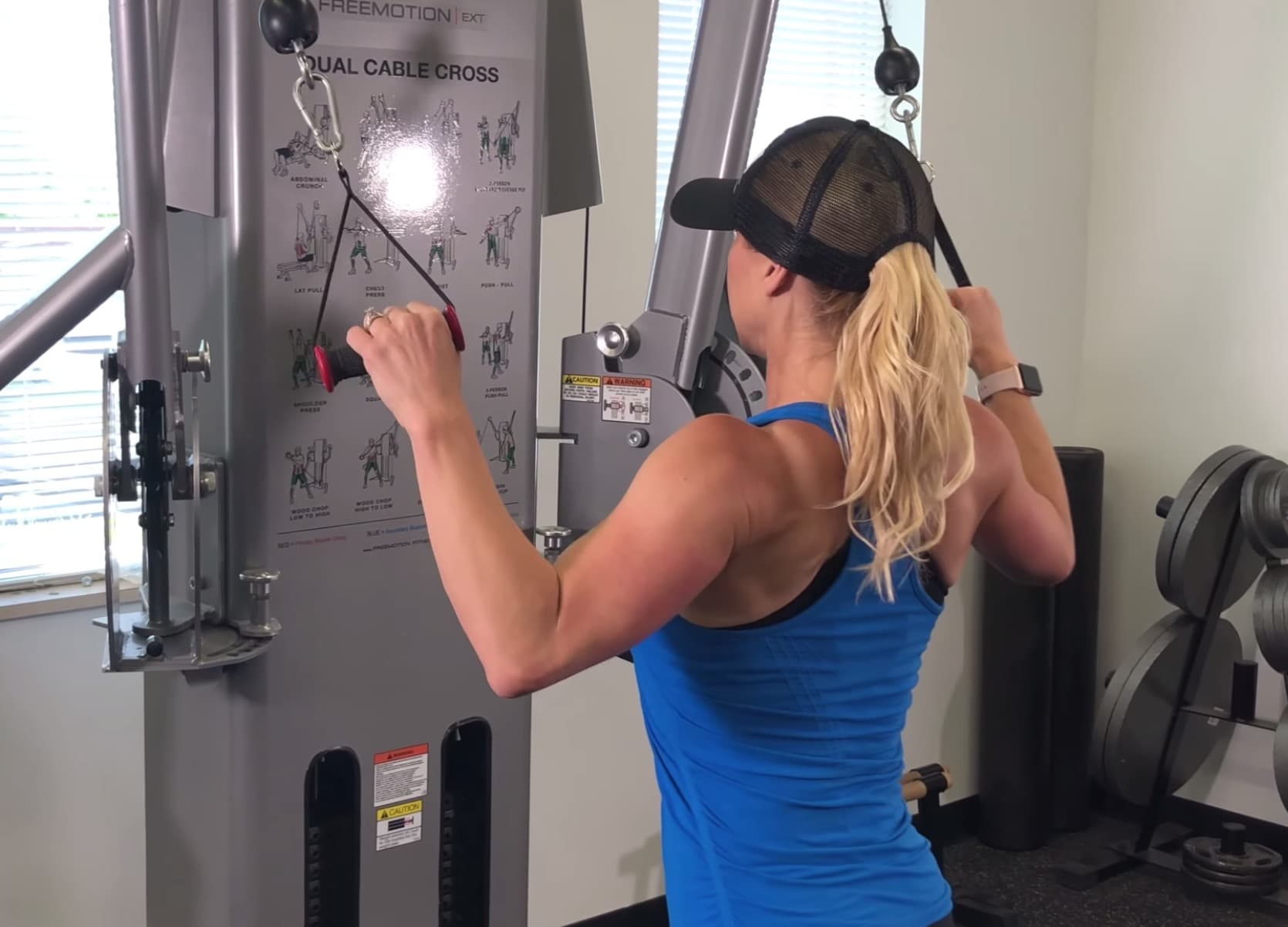
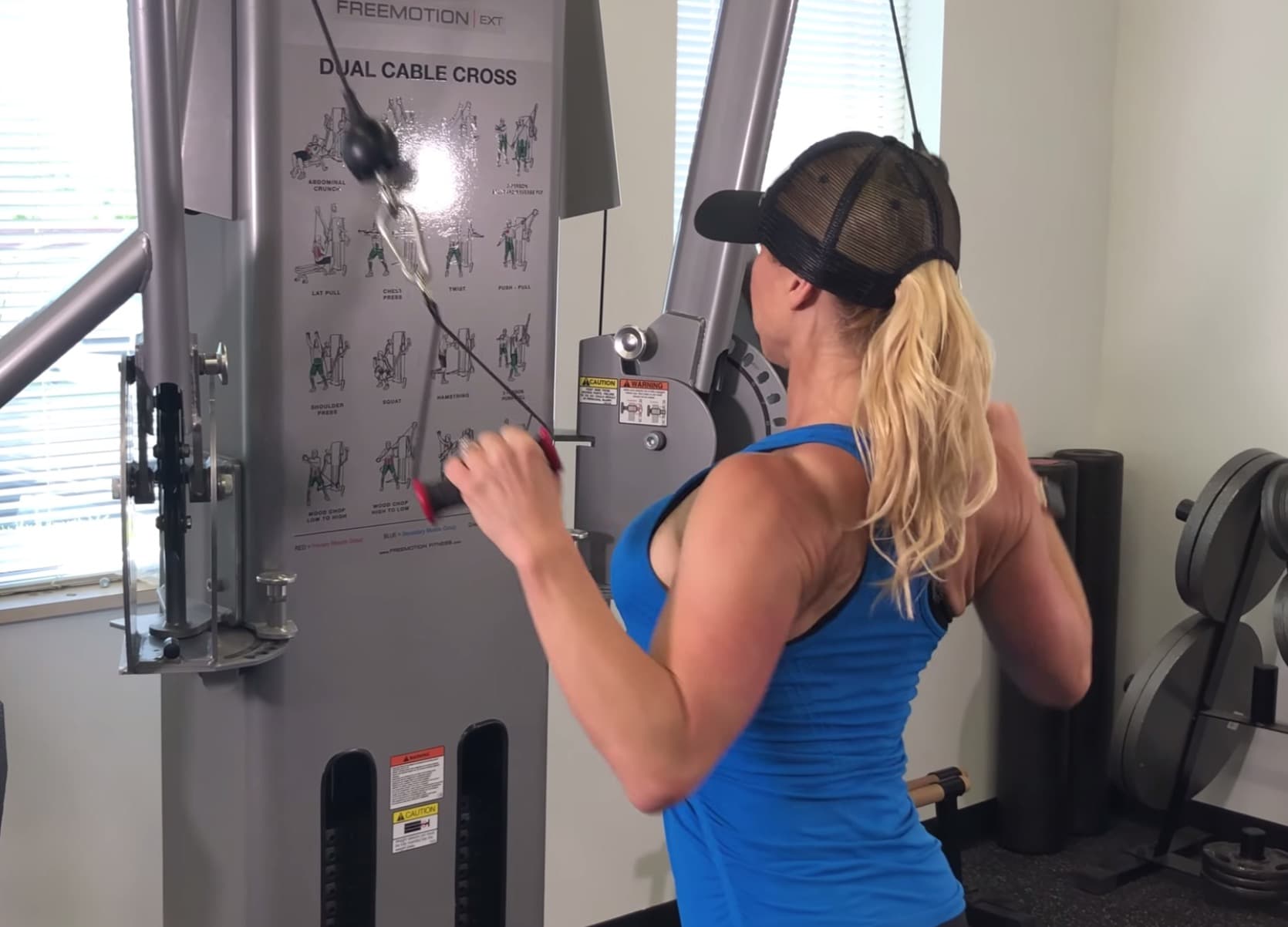
How to Do a Banded Lat Pulldown at Home
Banded lat pulldowns are the perfect alternative to a cable machine if you train at home or travel often. All you need is a resistance band and a sturdy overhead anchor point.

If you are struggling to feel your lats working, focus on squeezing your shoulder blades together as you pull the band down. Visualize your back muscles doing all the work, not your arms. Aim for three sets of 12 to 15 clean reps.


How to Do a Machine Lat Pulldown at the Gym
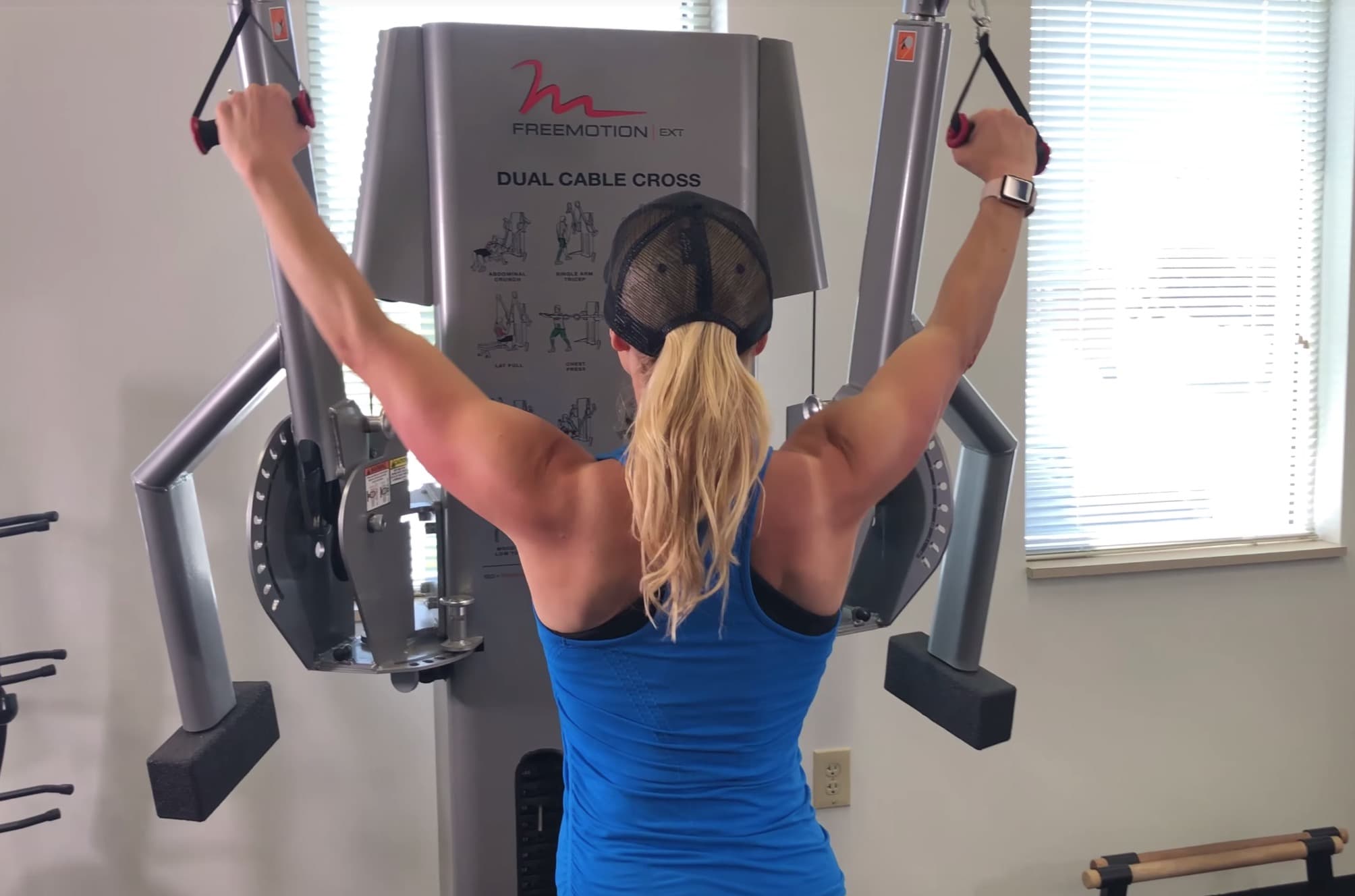
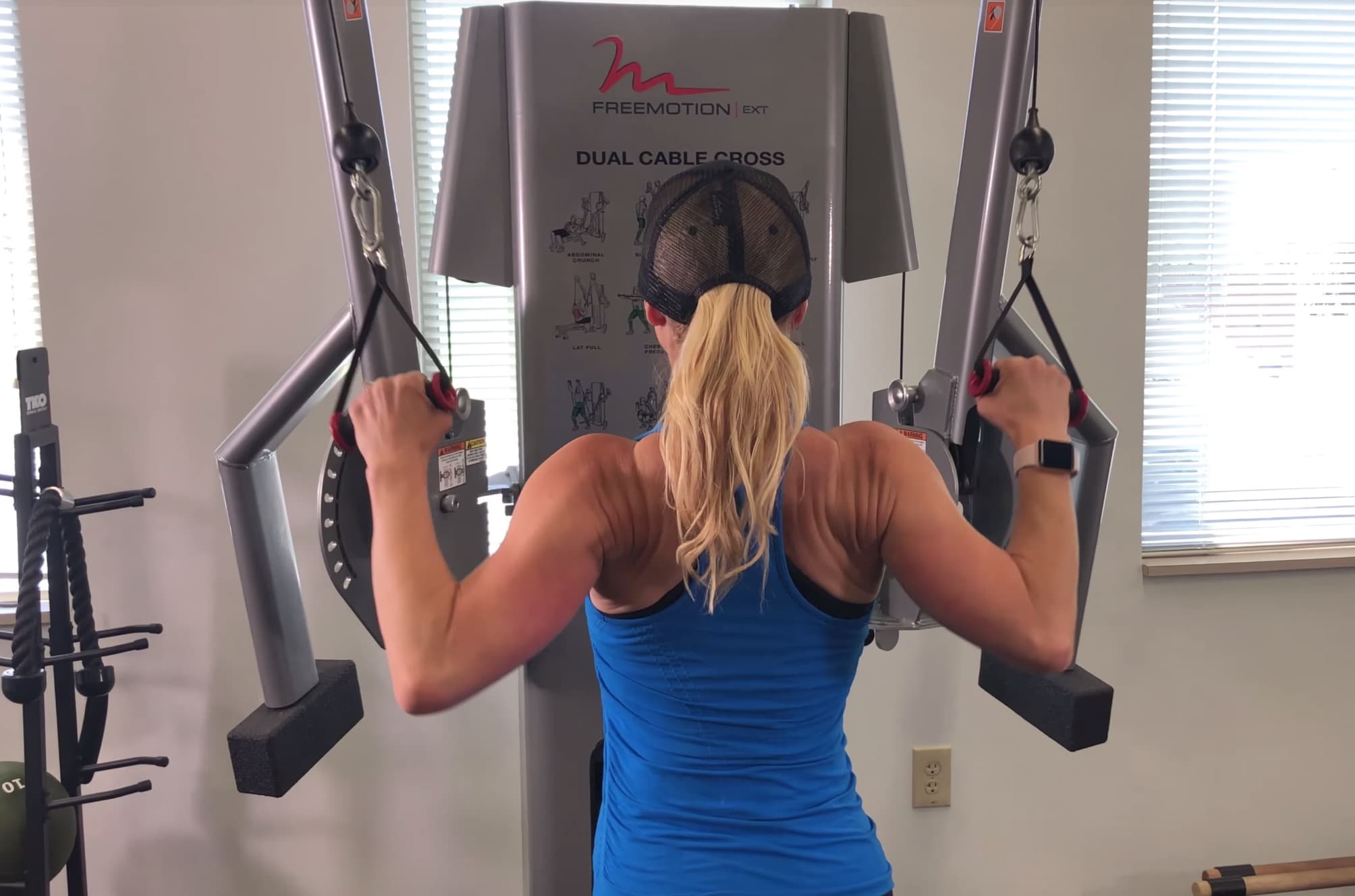
The machine lat pulldown is the classic version of this exercise, performed on a cable machine with a bar or handle attachment. It offers precise load control and is my go-to for progressive strength work.
Avoid using momentum to yank the bar down. A slow, steady pull is what engages your lats and protects your shoulders. Three sets of 10 to 12 clean, controlled reps will build significantly more back strength than five sets of sloppy ones.


What Muscles Do Lat Pulldowns Work?
Lat pulldowns primarily load the latissimus dorsi, with strong support from the biceps, rhomboids, rear deltoids, and forearms. The core stays engaged throughout to stabilize the trunk, and the shoulder stabilizers work to keep the shoulder joint healthy through the pulling motion. Research on grip width and lat pulldown activation supports the wide overhand grip as the strongest position for hitting the lats directly. For a visual reference on the extrinsic back muscles, TeachMeAnatomy has a clear overview.
See the full muscle breakdown
- Latissimus dorsi: the primary mover, drives the arms down and back and creates the wide, V-shaped taper.
- Rhomboids and middle trapezius: retract the shoulder blades at the bottom of the pull, building the mid-back and upper back thickness.
- Rear deltoids: assist with pulling the arms down and back, supporting shoulder health and posture.
- Biceps and brachialis: flex the elbows through the pull and contribute significantly to the total pulling strength.
- Forearms and grip: hold the bar or band securely throughout every rep.
- Core and obliques: stabilize the trunk and prevent the low back from arching under the pull.
Sets and Reps
Program lat pulldowns two to three times per week as part of a back day, an upper body day, or a full body session. Progress with weight, band tension, or reps over time.
| Goal | Sets | Reps |
|---|---|---|
| Strength (machine) | 3 to 4 | 8 to 10 |
| Hypertrophy and back development | 3 | 10 to 12 |
| Banded at home or endurance | 3 | 12 to 15 |
Rest 60 to 90 seconds between sets. If you have any active shoulder pain or a history of rotator cuff injury, clear this and any pulling work with your physical therapist or physician before adding it in.
Lat Pulldown Variations
To keep your back workouts fresh and to hit the muscles from different angles, layer in these lat pulldown variations.
Lat Pulldown Pulse
Hold the bottom position of the pulldown and perform small pulsing movements to maintain tension on the lats. A great finisher to fully fatigue the back at the end of a working set. Focus on squeezing the shoulder blades together at the bottom of every pulse.


Close-Grip Lat Pulldown
Use a narrow neutral or underhand grip on the cable machine to shift the emphasis toward the middle of your back and add more direct biceps work. A smart complement to the wide grip version for balanced back development.
Single-Arm Banded Lat Pulldown
Perform the banded pulldown one arm at a time. Helps correct muscle imbalances by working each side of your back individually and adds a small anti-rotation demand on the core.
Related upper body and back movements can be found in the FITBODY Exercise Library.
Common Mistakes to Avoid
- Pulling with your arms instead of your back. If you feel this exercise mainly in your biceps, cue the shoulder blades to drive the pull. The elbows follow, the arms do not lead.
- Using momentum. Rocking or yanking the bar down turns this into a full-body sway and steals the work from your lats. Slow, steady pulls build back strength.
- Rounding the low back or leaning too far back. A small lean is fine, but if you are lying backward to pull the bar down, the weight is too heavy. Drop the load and reset your position.
- Not going through full range. Extend the arms fully at the top and pull the bar to your upper chest at the bottom. Cutting the range steals the results.
Lat Pulldown FAQs
Can I do lat pulldowns at home without a machine?
Absolutely. Banded lat pulldowns are an excellent alternative to the cable machine version and are one of my favorite at-home back exercises. They mimic the same pulling motion, engage the same muscles, and only require a resistance band and a sturdy overhead anchor point like a door anchor, pull-up bar, or ceiling beam. If you train at home or travel often, banded lat pulldowns keep your back work consistent.
What muscles do lat pulldowns work?
Lat pulldowns primarily target the latissimus dorsi, the large muscles that give the back its wide, V-shaped look. They also engage the biceps, forearms, rhomboids, rear deltoids, and other stabilizing muscles in the upper back and shoulders. The core stays engaged throughout to hold the trunk stable. Because pulldowns train a movement pattern used in daily life, they carry over to better posture and stronger upper body function.
Are lat pulldowns effective for women?
Yes, lat pulldowns are highly effective for women looking to build upper body strength, improve posture, and create a toned, sculpted back. They are especially valuable for women over 40 because direct pulling work counters the forward-rounded shoulder position most of us fall into from desk work and phone use. Building the muscles of the back also improves posture in a way that changes how clothes fit and how confident you feel standing tall.
What is the difference between the banded lat pulldown and the machine lat pulldown?
The main difference is the equipment. A machine lat pulldown uses a cable machine, typically found in gyms, and lets you dial in precise load with a weight stack. A banded lat pulldown uses a resistance band anchored overhead, which makes it accessible for home workouts and travel. The banded version applies progressive tension that increases as you pull down, while the machine version applies consistent load throughout the range. Both build the lats effectively.
How often should I do lat pulldowns in my workout routine?
Two to three times per week as part of an upper body or back-focused day is a strong dose for most women. Rotate between variations like the banded pulldown, the machine wide grip, the close-grip, and the pulse to target the muscles from different angles and prevent plateaus. Because pulldowns are a compound movement, they carry over strongly to almost any pulling task in daily life.
References
- Andersen, Vidar, et al. “Effects of Grip Width on Muscle Strength and Activation in the Lat Pull-Down.” Journal of Strength and Conditioning Research, vol. 28, no. 4, 2014, pp. 1135-1142, https://doi.org/10.1519/JSC.0000000000000232.
Train With An Expert
Want a Plan Built Around You?
I’m Julie Lohre, an IFBB Fitness Pro and certified personal trainer and nutrition specialist. For more than 20 years I have helped women over 40 get stronger, leaner, and more confident through personalized online coaching built around their real lives.