Incredible online personal training body transformation!
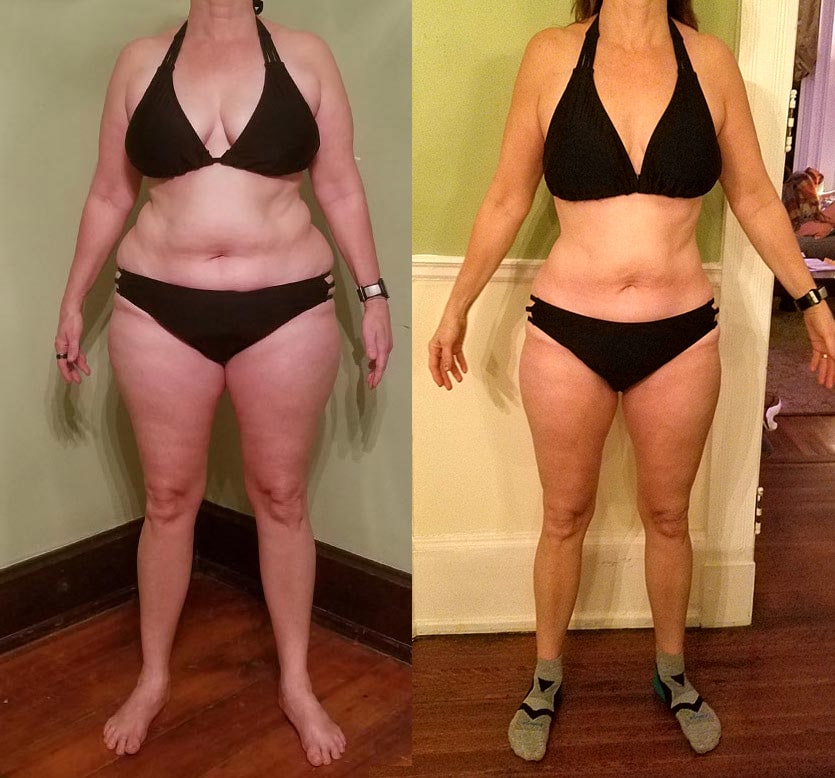
Her 40 lbs weight loss with 7 inches off her waist was just the icing for Renee Cipriani. This 53 year-old fit grandmother is stronger, faster & healthier! See how she made this incredible body transformation!
Hometown
Personal Information

"I resolved to change my life by focusing on taking care of myself physically, spiritually and mentally."

What are your greatest fitness accomplishments?
Describe your Fitness Journey
As a working mom, I let taking care of myself slide way down the list of my priorities. Then I watched my oldest sister, Candy, achieve a healthier life – she has lost more than 100 pounds and is maintaining that weight loss! How inspiring! I wanted that, so two years ago, I resolved to change my life by focusing on taking care of myself physically, spiritually and mentally. I found that these three areas are completely intertwined for me. In 2016 I became a runner and through running, I found a closer relationship with God, a clearer mind, a stronger, healthier body, and made many great friends I probably otherwise would not have met. For this I am deeply grateful.
I have always been more active than most of the population, playing softball and soccer, working out, swimming and boating/kayaking, but I took it to a new level at the age of 52. I learned I have outdoor allergies and battled neuromas in my feet for most of the year, but thankfully that is now under control.
2016 year in review according to my Garmin (I'm sure I forgot to track some activities or my battery died LOL) 😀
Steps- 4,100,718 (2,401.5 miles)
Swimming- 2,379 yards
Cycling- 94.8 miles
Walking- 321.2 miles
Running- 615.5 miles
Races
1 mile - 1
5k - 12
4 mile - 1
10k - 1
14k - 1
Half Marathon Relay - 1
Half Marathon – 2
During that year, I still managed to gain 20 pounds! I had heard about Julie Lohre through a new friend, Misty Vaccariello whose fitness journey I had been watching closely, and was amazed at Julie’s client’s transformations. I had tried apps, low calorie diets and running, lots and lots of running, but had not made any headway in my fitness journey.
"Now, 8 months into working with Julie, I have lost 40 pounds and 7 inches in my waist alone! I have dropped 4 pants sizes and I feel amazing!"
Tranformation Info
I tried working out in the gym on my own, then I tried running (lots of running), but neither got me the results I was looking for.
In my first 16 weeks of working with Julie Lohre in her online personal training program for women, I lost 25 pounds! I looked and felt like a different person. Now, 8 months into working with Julie, I have lost 40 pounds and 7 inches in my waist alone! I have dropped 4 pants sizes. Through working with Julie, I learned how to eat to fuel and support my body, not just eat or count calories, and I am losing fat, gaining lean muscle, getting stronger and feeling great about the changes I am making. I learned to eat the right foods in the right portions at regular times throughout the day. I also learned how to work out to achieve the results I am looking for.
What are your fitness goals?
My fitness goal is to be healthy and fit for life, and to feel good about myself. It is amazing how much happier I am and how much better everything in my life is since I started making my fitness a priority. A specific goal is to build muscle definition and lift progressively heavier.
What do you love most about fitness?
Fitness is a solid part of my everyday life. I look forward to my weight lifting, stretching or cardio and get irritated if anything threatens to interfere with it. I am stronger, have more endurance and more flexibility, allowing me to more easily enjoy the sports I like to play, compete in races and participate in activities with my grandchildren.
What motivates you to maintain a healthy lifestyle?
How do you stay motivated?
The bi-weekly check-in’s with Julie Lohre in her online personal training program help me stay motivated. Seeing my steady progress in photos and in measurements of inches lost or speed and flexibility gained inspires me to continue working toward my fitness goals. When Julie sent me my week one and week 16 photos side by side I was astonished at the changes in my body. The changes happened gradually so they weren’t as obvious to me until I saw these photos; I was amazed. Sharing my fitness journey with friends and family also motivates me! We work out, run, walk and cycle together and share tasty nutritious recipes.
Favorite clean eating food or recipe
I love Julie’s Lemon Pepper Chicken and Sweet Potato Hash recipe, and to satisfy my sweet tooth, I love UMP Protein Pancakes and Chocolate Chip Oatmeal Protein, both using Cookies and Cream flavored UMP, my absolute favorite! Eating healthy tastes good!
How do you balance nutrition?
I try to adhere to the nutrition plan Julie Lohre prepares for me, and I am learning to eat within my plan even when eating out. Salads and lean protein are available at most restaurants. The variety in the foods in Julie’s plans keeps it interesting, and Julie considers my preferences as to types of foods or the amount of prep time involved. I prepare meals several days at a time and keep some go to favorites on hand in case I get hungry, like baby carrots and asparagus. If I’m on the go, a cooler with a couple meals is often with me. Eating a small meal every 2 hours or so is key to not being hungry.
"It is amazing how much happier I am and how much better everything in my life is since I started making my fitness a priority"Renee Cipriani
Online Personal Training Transformation – Renee Cipriani
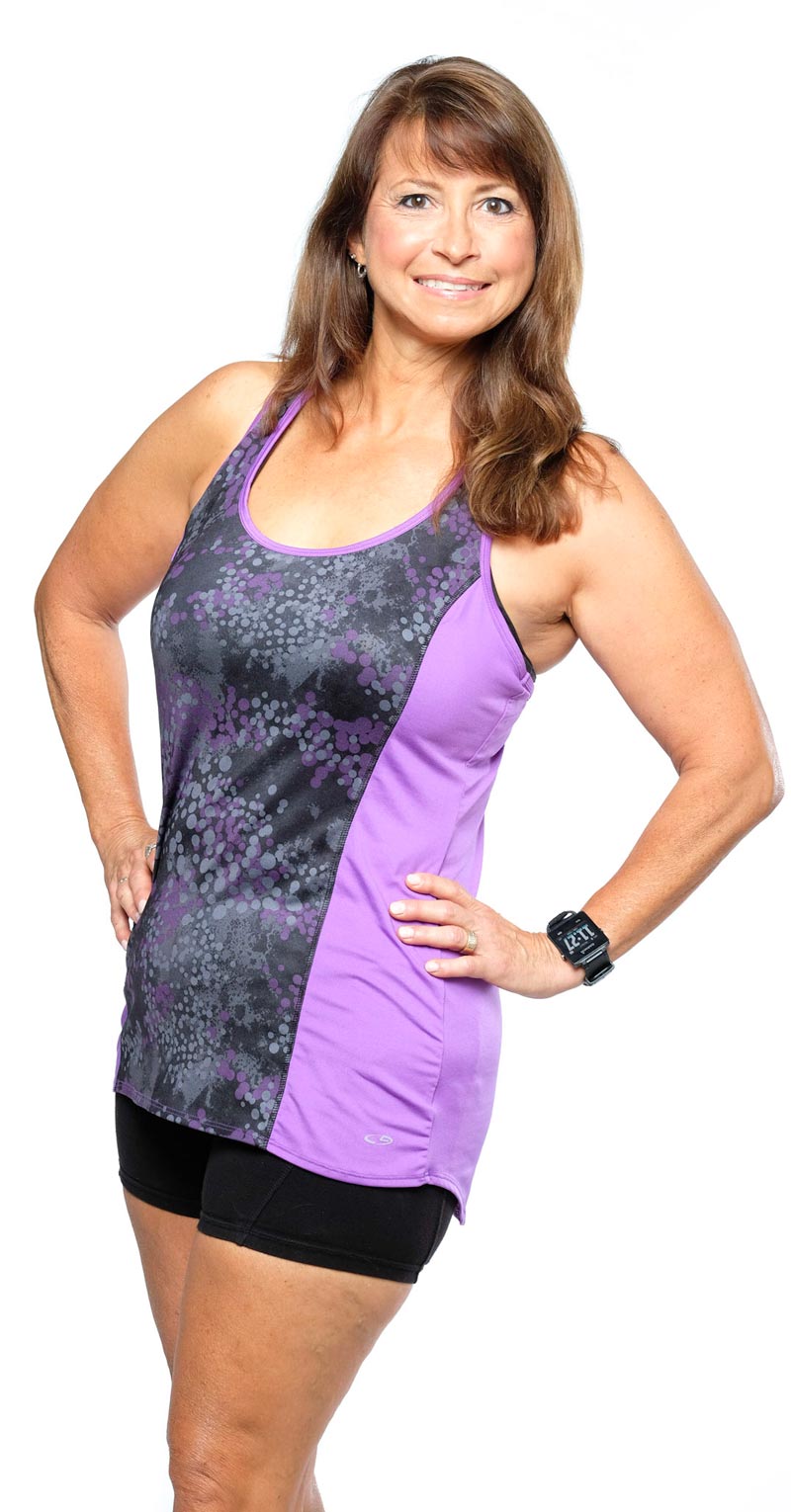
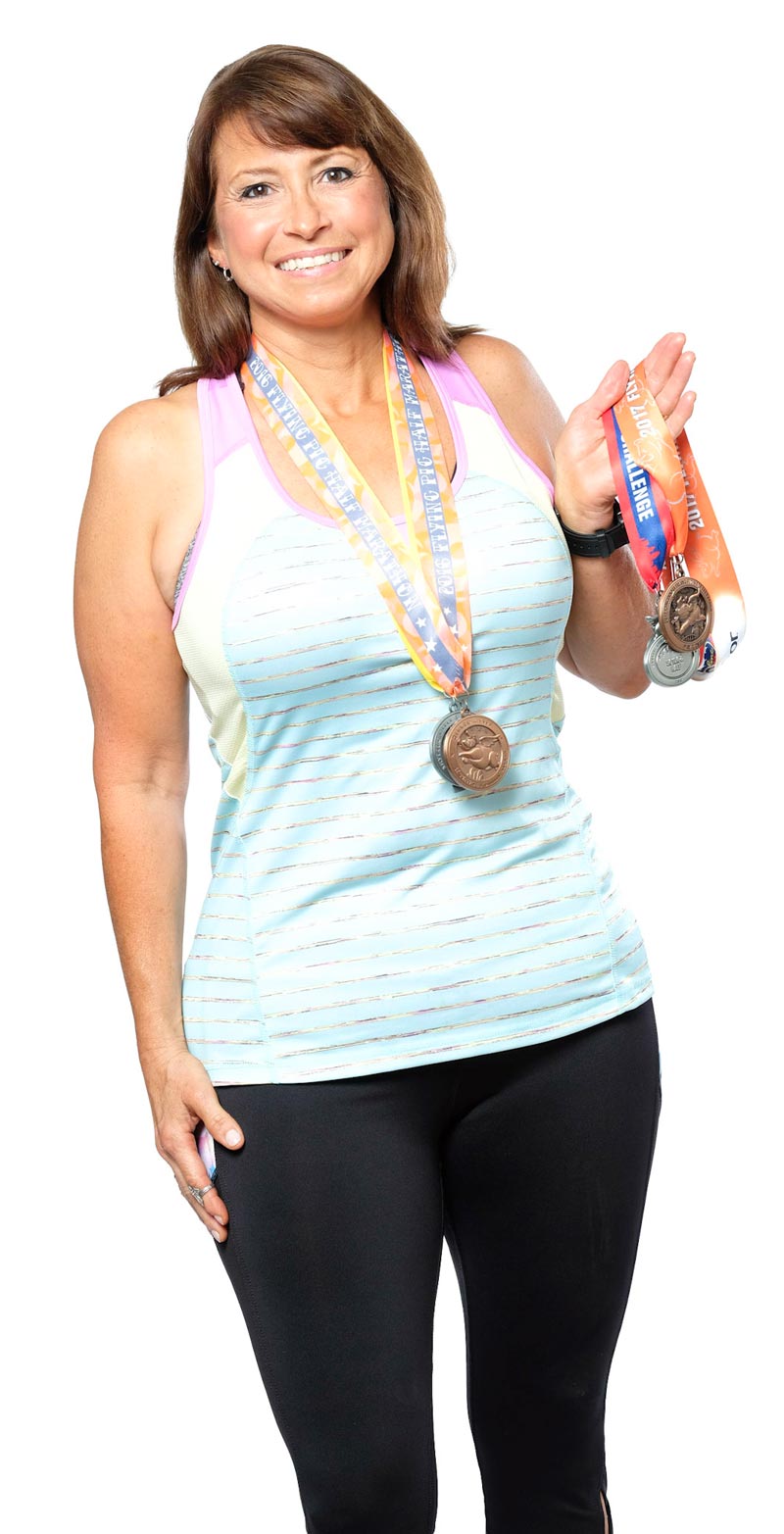
Renee Cipriani Fit Grandmother!
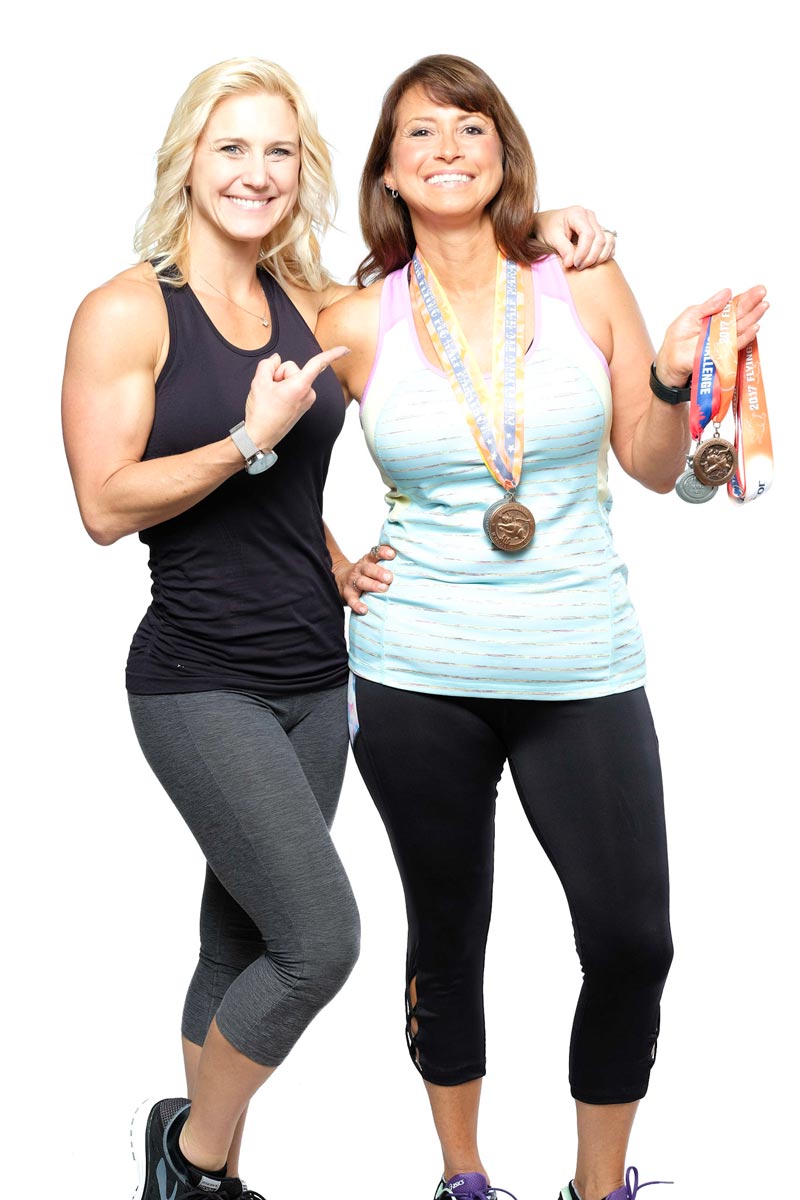
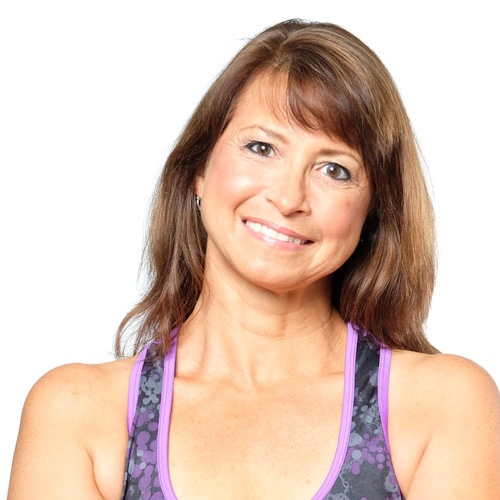
Fitness Pro Julie Lohre with Renee Cipriani
What unique challenges do you face?
After I began running (mostly outdoors) 2 years ago, I started having significant respiratory issues and learned I have severe allergies to trees and molds. After trying a variety of medications, my allergist recommended allergy shots, which I have received each week for about 8 months now. Therapy usually takes 14 months to begin providing relief. The nurse told me that I am an overachiever – most people get one shot each week but I have so many allergies, I get two shots! Until the therapy provides relief, I take daily medications which alleviate but do not eliminate my symptoms. With running training, I developed foot pain and after several months of medical treatment, learned I have malformations in my feet that will eventually require surgery to repair, putting me off one foot or the other for the better part of a year. Meanwhile, I have adapted my cardio to limit running to 3 to 5 miles and only a couple times a week.
I also have a full schedule, working full time, teaching part time at a local university, serving in the community and helping my 90 year old father one afternoon each week, so creative scheduling is sometimes necessary to make sure I get all the work outs and cardio in, but my fitness is a priority.
Travel was a challenge with regard to nutrition, but with Julie’s guidance and support and ideas from others in the Fitbody community, I was able to stay on track and even lose weight.
Are you ready to take your fitness to a whole new level?
In 2 training sessions, the average woman taking part in Julie Lohre’s Online Personal Training program DOUBLES the # of strict pushups she can do, decreases 1 mile run times by 2 mins, 30 seconds & increases flexibility by 3 inches.
Results speak for themselves… Talk about stronger, faster & more flexible!