
FITBODY Exercise Library · FULL BODY
Single Arm Dumbbell Snatch
The single arm dumbbell snatch, also called the alternating dumbbell snatch, is a full-body power exercise that moves one dumbbell from the floor to overhead in one controlled, explosive motion. Learn proper form, muscles worked, sets and reps, beginner modifications, and common mistakes.
What Is a Single Arm Dumbbell Snatch?
The single arm dumbbell snatch is a full-body exercise where you move one dumbbell from the floor to overhead in one powerful motion. It is also commonly called a one-arm dumbbell snatch or alternating dumbbell snatch when you switch arms each rep.
The movement starts from a hinge or squat-like setup, then uses forceful hip, knee, and ankle extension to drive the dumbbell upward. The arm helps guide and finish the lift, but the power should come from the legs and hips first.
This exercise trains strength, power, coordination, and overhead control. It is not a simple shoulder raise. A good rep should look like a powerful lower-body drive into a smooth overhead catch, not a curl or press disguised as a snatch.
How to Do the Single Arm Dumbbell Snatch

Think “jump the weight up, then punch under it.” The dumbbell should float because your legs and hips did the work, not because you yanked it with your arm. If the weight swings away from you or you have to press it out at the top, go lighter and reset your timing.
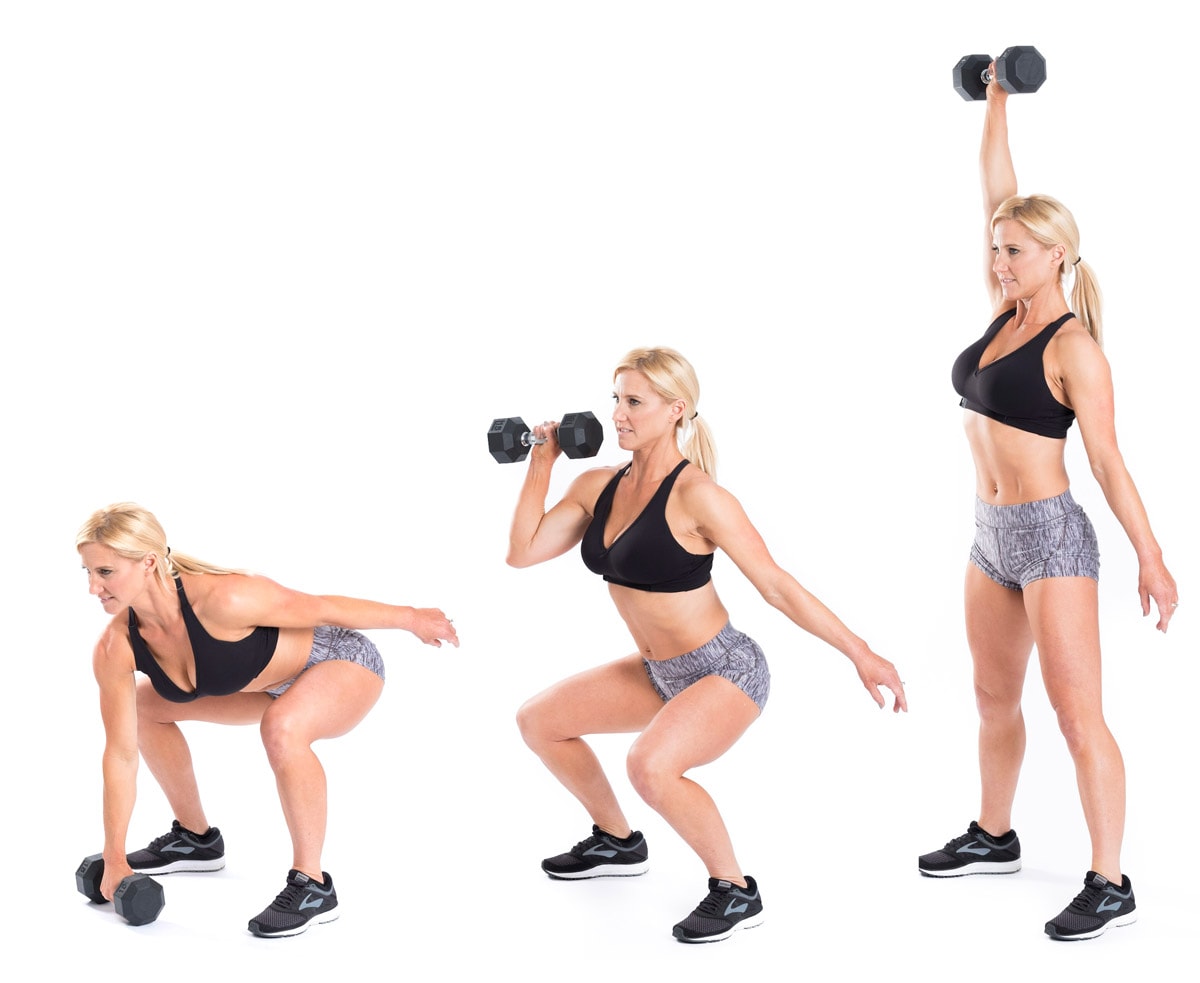
Single Arm vs. Alternating Dumbbell Snatch
A single arm dumbbell snatch can be performed for all reps on one side before switching. An alternating dumbbell snatch switches arms each rep, usually after the dumbbell returns to the floor.
Both versions use the same basic technique. The single-side version is easier to track when you are learning or using heavier loads because each side gets focused practice. The alternating version adds rhythm, coordination, and conditioning because you change hands repeatedly.
For most women learning the movement, start with all reps on one side, rest, then repeat on the other side. Once both sides feel consistent, alternating reps can work well in circuits or full-body conditioning sessions.
Why the Dumbbell Snatch Is a Power Exercise
The dumbbell snatch is built around a fast lower-body drive. The hips, knees, and ankles extend together to accelerate the weight before the arm turns over and catches the dumbbell overhead.
Research comparing one-handed dumbbell power snatches with barbell power snatches found that the dumbbell version creates a different unilateral movement pattern and different force demands between sides. That supports coaching the dumbbell snatch as its own skill rather than treating it as a smaller barbell snatch.
Because this is a power exercise, fatigue changes form quickly. Use a load you can move fast while staying controlled, and stop the set before the movement turns into a slow pull, shoulder press, or awkward swing.
What Muscles Does the Single Arm Dumbbell Snatch Work?
The single arm dumbbell snatch works the glutes, hamstrings, quadriceps, calves, shoulders, traps, upper back, core, forearms, and grip. The lower body creates the main drive, while the upper body guides and stabilizes the dumbbell overhead.
The glutes, hamstrings, and quadriceps extend the hips and knees during the pull from the floor. The traps and upper back help guide the dumbbell close to the body. The deltoids, triceps, rotator cuff, and scapular stabilizers help finish and stabilize the overhead catch.
See the full muscle breakdown
- Gluteus maximus: Extends the hips as you drive the dumbbell off the floor and accelerate the lift.
- Hamstrings: Assist hip extension and help control the hinge position at the start and reset.
- Quadriceps: Extend the knees as you drive through the floor and stand tall.
- Calves: Assist the final part of the lower-body drive as the ankles extend.
- Deltoids and triceps: Help guide and stabilize the dumbbell in the overhead catch.
- Trapezius and upper back: Help keep the dumbbell close and support the high pull phase.
- Core muscles: Help resist twisting and keep the rib cage and pelvis controlled as one arm lifts overhead.
- Forearms and grip: Hold the dumbbell securely through the pull, catch, and lowering phase.
Sets and Reps
Single arm dumbbell snatches should be performed with crisp reps. Use a weight that lets you move powerfully and catch the dumbbell overhead without pressing it out.
| Goal | Sets | Reps |
|---|---|---|
| Learning technique | 2 to 3 each side | 3 to 5 |
| Power and strength accessory work | 3 to 5 each side | 4 to 6 |
| Conditioning circuit | 2 to 4 | 6 to 10 each side |
Rest 60 to 120 seconds for power-focused sets, or follow your circuit structure for conditioning work. Progress by improving timing first, then adding reps, adding sets, or using a slightly heavier dumbbell. For a full progression framework, see my guide to progressive overload for women.
Single Arm Dumbbell Snatch Variations
Dumbbell High Pull
Practice the pull without catching overhead. Drive through the legs, keep the dumbbell close, and guide the elbow high. This can help you learn the path before adding the catch.
Hang Dumbbell Snatch
Start with the dumbbell above the knees instead of from the floor. This shortens the range and lets you focus on hip drive, timing, and the overhead catch.
Alternating Dumbbell Snatch
Switch arms each repetition after the dumbbell returns to the floor. This version works well in conditioning workouts when both sides already have solid technique.
Single-Side Dumbbell Snatch
Complete all reps on one arm before switching sides. This is often better for technique practice and strength-focused sets because you can concentrate on one side at a time.
Dumbbell Clean to Press
If the overhead catch feels awkward, use a dumbbell clean to shoulder level, then press overhead separately. This reduces the speed and skill demand.
Full-Body Pairing
Pair dumbbell snatches with low impact burpees, man makers, or the sumo deadlift high pull for a full-body conditioning session.
Common Single Arm Dumbbell Snatch Mistakes
- Pulling only with the arm. The legs and hips should drive the movement. The arm guides the dumbbell, but it should not curl or muscle the weight overhead.
- Swinging the dumbbell away from the body. Keep the dumbbell close so it travels upward, not in a wide arc away from you.
- Pressing out at the top. If you have to grind through a shoulder press to finish the rep, the weight is too heavy or the timing is off.
- Rounding the back from the floor. Set your hinge, brace your core, and keep the chest lifted before the dumbbell leaves the ground.
- Letting the dumbbell crash overhead. Catch with control and keep the wrist stacked over the shoulder instead of letting the weight pull backward.
- Rushing the reset. Each rep should begin from a stable floor position. Do not bounce the dumbbell into the next rep.
Single Arm Dumbbell Snatch FAQs
What is a single arm dumbbell snatch?
A single arm dumbbell snatch is a full-body power exercise where you move one dumbbell from the floor to overhead in one motion. The movement starts with a hinge or squat-like setup and finishes with the dumbbell locked out overhead. The lower body creates the main drive, while the arm guides and stabilizes the weight. When you switch arms each rep, it is commonly called an alternating dumbbell snatch.
What muscles does the single arm dumbbell snatch work?
The single arm dumbbell snatch works the glutes, hamstrings, quadriceps, calves, shoulders, traps, upper back, core, grip, and forearms. The legs and hips drive the dumbbell off the floor. The upper back and shoulder guide the dumbbell close to the body. The core helps resist rotation as one arm moves overhead.
Is the dumbbell snatch a shoulder exercise?
The dumbbell snatch involves the shoulder, but it is not just a shoulder exercise. The shoulder stabilizes the dumbbell overhead, while the legs, hips, back, and core create and control most of the movement. Treating it like a shoulder raise usually leads to poor form. Think of it as a full-body power movement with an overhead catch.
How heavy should a single arm dumbbell snatch be?
Use a dumbbell you can move quickly and catch overhead without pressing it out. Beginners should start light enough to practice timing, path, and overhead control. If the dumbbell swings away from you, pulls your back out of position, or crashes overhead, it is too heavy. Add load only after both sides look consistent.
Should I alternate arms every rep?
You can alternate arms every rep, but you do not have to. Alternating reps work well for conditioning once your technique is solid. Doing all reps on one side before switching is better when you are learning, using a heavier dumbbell, or trying to keep your reps cleaner. Whichever method you choose, match the same number of reps on both sides.
Why does the dumbbell hit my wrist at the top?
The dumbbell usually hits the wrist when the turnover is too late, the pull is too wide, or the weight is too heavy. Keep the dumbbell close, guide the elbow high, then rotate the hand around the dumbbell as you catch. The finish should feel like a fast punch under the weight, not a slow flip. If it still bangs into the wrist, reduce the load and practice from the hang position.
How many single arm dumbbell snatches should I do?
For technique, start with 2 to 3 sets of 3 to 5 reps per side. For power-focused accessory work, use 3 to 5 sets of 4 to 6 reps per side. For conditioning, 6 to 10 reps per side can work if the weight is light enough to keep form consistent. Stop the set before speed, posture, or overhead control breaks down.
Are single arm dumbbell snatches safe or good for women over 40?
Single arm dumbbell snatches can be useful for women over 40 when the load, range of motion, shoulder position, and speed match current ability. Age alone does not determine whether the exercise is appropriate. Start with a light dumbbell, practice a high pull or hang snatch first, and keep the overhead catch controlled. Persistent shoulder, wrist, back, hip, or knee pain during the movement should be assessed rather than trained through.
References
- Lauder, Mike A., and Jason P. Lake. “Biomechanical Comparison of Unilateral and Bilateral Power Snatch Lifts.” Journal of Strength and Conditioning Research, vol. 22, no. 3, 2008, pp. 653-660. doi.org/10.1519/JSC.0b013e3181660c89. This study directly compared one-handed dumbbell power snatches with barbell power snatches in 10 male weightlifters. It supports treating the dumbbell snatch as a distinct unilateral skill, but the sample was small and trained.
- National Strength and Conditioning Association. “One-Arm Dumbbell Snatch.” Exercise Technique Manual for Resistance Training, 3rd Edition With Online Video, excerpt published by NSCA, June 2017. NSCA Technique Article. This technique reference describes the setup, triple-extension drive, catch, and controlled lowering sequence for the one-arm dumbbell snatch.
- Suchomel, Timothy J., Paul Comfort, and Michael H. Stone. “Weightlifting Pulling Derivatives: Rationale for Implementation and Application.” Sports Medicine, vol. 45, no. 6, 2015, pp. 823-839. doi.org/10.1007/s40279-015-0314-y. This review supports the importance of forceful hip, knee, and ankle extension in weightlifting-style pulling movements, though it focuses on pulling derivatives rather than the exact dumbbell snatch shown here.
- Comfort, Paul, et al. “National Strength and Conditioning Association Position Statement on Weightlifting for Sports Performance.” Journal of Strength and Conditioning Research, vol. 37, no. 6, 2023, pp. 1163-1190. doi.org/10.1519/JSC.0000000000004476. This position statement summarizes evidence on weightlifting exercises and derivatives for force, rate of force development, and power. It supports the broader power-training context, not a claim that this single exercise is necessary for every lifter.
Train With An Expert
Want a Plan Built Around You?
I’m Julie Lohre, an IFBB Fitness Pro and certified personal trainer and nutrition specialist. For more than 20 years I have helped women over 40 get stronger, leaner, and more confident through personalized online coaching built around their real lives.