FITBODY Exercise Library · Core & Balance
Warrior Three Crunch
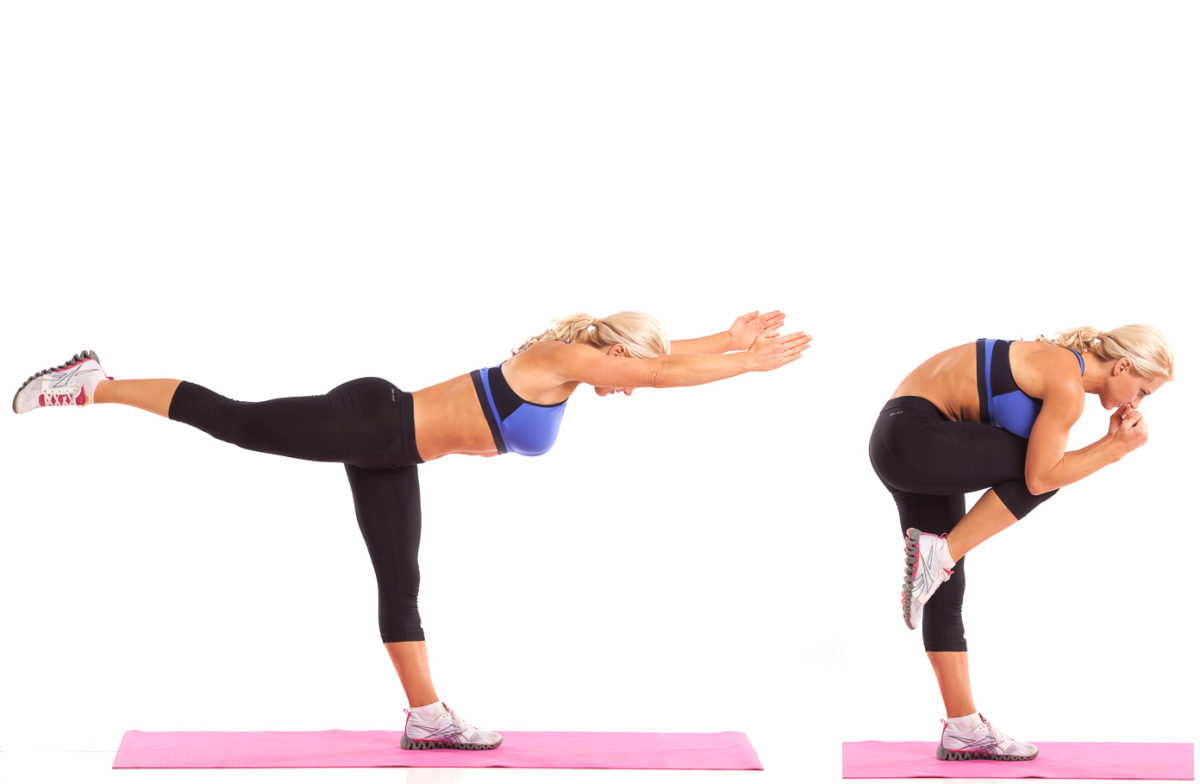
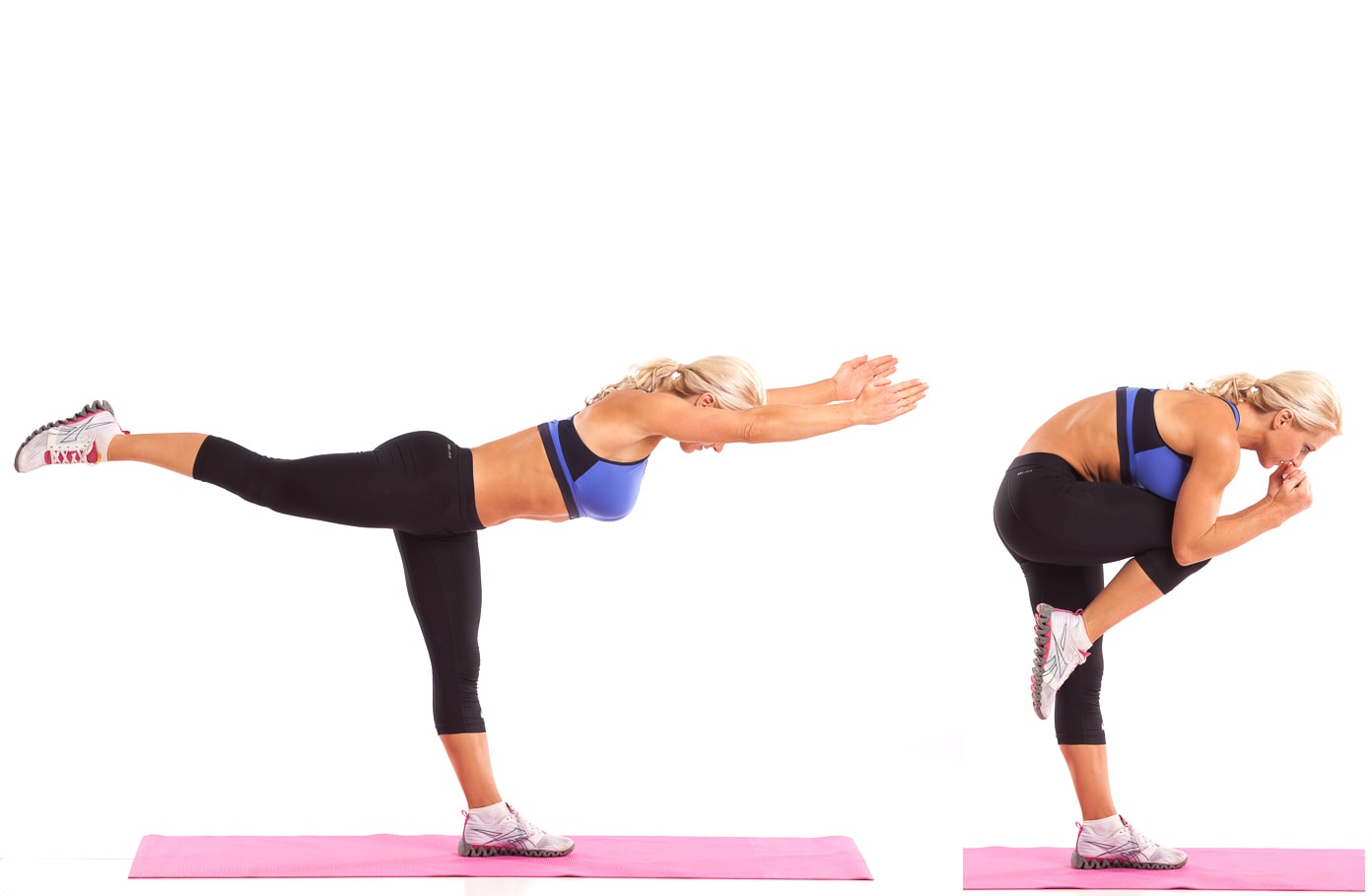
The warrior three crunch is a yoga-inspired standing core exercise that combines Warrior 3 balance with a dynamic knee-to-chest crunch, building deep abdominal strength, glute stability, and full body coordination in one movement.
How to Do a Warrior Three Crunch
Balance first, crunch second. If you cannot hold a stable Warrior 3 for a few breaths, you are not ready to add the crunch yet. Master the balance, then layer in the movement. Rushing the crunch will just leave you tipping over and frustrated. Slow is fast here.

What Muscles Does the Warrior Three Crunch Work?
The warrior three crunch loads the rectus abdominis and obliques on the crunch contraction, while the glutes and hamstrings of the standing leg work continuously to hold you steady in Warrior 3. The extended back leg fires the glutes and hamstrings on that side, and the spinal erectors work to hold the trunk long and level. Because your entire base is one foot on the floor, the ankle stabilizers and gluteus medius get a serious workout too. It is one of the more efficient standing core exercises for building the kind of balance and control that carry into every lift and every daily activity. This pairs well with the strength approach I use inside my FITBODY Recomposition System. For a visual reference on the anterolateral abdominal wall, TeachMeAnatomy has a clear overview.
See the full muscle breakdown
- Rectus abdominis: the primary mover on the crunch, contracting to pull the elbows and knee toward the midline.
- External and internal obliques: resist rotation and stabilize the trunk throughout the balance and crunch.
- Gluteus maximus (standing leg): extends the hip to hold you in the Warrior 3 position and controls the balance.
- Hamstrings (standing leg): work with the glutes to hold you steady on one leg.
- Gluteus medius (standing leg): stabilizes the pelvis and keeps the hips from tipping to one side.
- Hip flexors (crunching leg): pull the knee up toward the chest on the crunch contraction.
- Spinal erectors: work isometrically to keep the trunk long and prevent the back from collapsing.
- Shoulders and deltoids: hold the arms extended forward in Warrior 3 and sweep them back on the crunch.
- Ankle stabilizers: grip the floor continuously to hold your standing base steady.
Sets and Reps
Warrior three crunches are quality over quantity. Once your balance breaks down or the crunch loses its shape, the set is done. Program them as part of a core block, at the end of a strength session, or inside a yoga flow.
| Goal | Sets per side | Reps |
|---|---|---|
| Core strength and balance | 2 to 3 | 8 to 10 |
| Yoga flow or mobility session | 1 to 2 | 5 to 8 |
| Beginner or introducing the exercise | 1 to 2 | 3 to 5 wall-supported or holding Warrior 3 only |
Rest 30 to 60 seconds between sides. Focus on quality of movement over rep count. If you have any active low back pain, recent hip surgery, or balance concerns, clear this and any single-leg work with your physical therapist or physician before adding it in.
Variations and Modifications
Warrior 3 Hold (Easier)
Skip the crunch entirely and just hold the Warrior 3 T-shape for 20 to 30 seconds per side. Great starting point for building the balance and glute strength you need before layering in the crunch component.
Wall-Supported Warrior Three Crunch
Place your fingertips lightly on a wall in front of you for balance support while you perform the crunch. Removes the balance demand so you can focus on the crunch mechanics. Smart option for anyone rebuilding standing balance or single-leg strength.
Chair-Supported Version
Rest one hand on the back of a sturdy chair for balance. Slightly more upright than the wall version and gives you a firm anchor if standing balance is a concern. Perfect while you build confidence in single-leg positions.
Weighted Warrior Three Crunch (Advanced)
Hold a light dumbbell or a small weight plate in both hands as you perform the movement. Adds load to the crunch and the shoulder stabilizers. Only for lifters with clean, confident balance in the bodyweight version.
Related core, balance, and yoga movements can be found in the FITBODY Exercise Library.
Common Mistakes to Avoid
- Rushing the crunch and tipping over. Balance takes priority. If you are losing your base every rep, slow the movement down, hold a wall, or drop back to a static Warrior 3 hold.
- Never fully extending into Warrior 3. If you never reach a long T-shape between reps, you are missing half of the exercise. Reach the leg all the way back and the arms all the way forward before you crunch again.
- Rounding the low back. The crunch happens through the upper abs and the meeting of elbows and knee. The low back stays long, not rounded. If you feel the low back straining, shorten your range.
- Holding your breath. Exhale on the crunch, inhale on the extension. If you are holding your breath, your balance suffers and the core does not brace correctly.
Warrior Three Crunch FAQs
What muscles does the warrior three crunch work?
The warrior three crunch primarily works the rectus abdominis and obliques through the crunching contraction, while the glutes and hamstrings of the standing leg work continuously to hold you in Warrior 3. The hip flexors of the moving leg pull the knee toward the chest, the spinal erectors keep the trunk long, and the shoulders extend and retract the arms. Because your entire base is one foot on the floor, the gluteus medius and ankle stabilizers also work overtime. It is one of the most efficient standing core exercises you can do.
Is the warrior three crunch a yoga pose or a strength exercise?
It is a hybrid of both. The starting position is Warrior 3, also known as Virabhadrasana III, a classic standing balance yoga pose. Adding the crunch turns it into a strength and stability exercise for the core and glutes. That combination is what makes it so effective. You get the balance, hip stability, and posture benefits of Warrior 3, and the core work of a targeted crunch, all in one movement.
How is the warrior three crunch different from a regular crunch?
A regular crunch is a floor-based exercise. You lie on your back and lift the shoulders and ribs off the floor to contract the abs. The warrior three crunch is standing, single-leg, and dynamic. You crunch from a Warrior 3 balance position, which adds significant demand on the glutes, hamstrings, hip stabilizers, and shoulders on top of the ab work. It also trains the abs in a functional standing position, which carries over better to everyday movement than lying on the floor.
Can beginners do the warrior three crunch?
Beginners can absolutely work toward this exercise, but a full bodyweight version straight out of the gate is usually too much. The smarter progression is to start with a static Warrior 3 hold for 15 to 30 seconds per side, then layer in the crunch once the balance is solid. The wall-supported and chair-supported versions are also excellent for beginners because they remove the balance demand and let you focus on the crunch mechanics. Build up from there.
Is the warrior three crunch safe for women over 40?
Yes, for most women, the warrior three crunch is a safe and highly useful addition. It builds single-leg strength, balance, and core control, which are all protective factors as we age. That said, if you have a history of low back issues, hip surgery, active knee pain, or balance concerns, start with the wall-supported or chair-supported version and clear any single-leg work with your physical therapist or physician first. Inside my FITBODY Lifestyle Coaching program, I choose core and balance work based on each client’s history, current level, and goals.
References
- Ross, Alyson, and Sue Thomas. “The Health Benefits of Yoga and Exercise: A Review of Comparison Studies.” Journal of Alternative and Complementary Medicine, vol. 16, no. 1, 2010, pp. 3-12, https://doi.org/10.1089/acm.2009.0044.
Train With An Expert
Want a Plan Built Around You?
I’m Julie Lohre, an IFBB Fitness Pro and certified personal trainer and nutrition specialist. For more than 20 years I have helped women over 40 get stronger, leaner, and more confident through personalized online coaching built around their real lives.