FITBODY Exercise Library · Legs & Shoulders
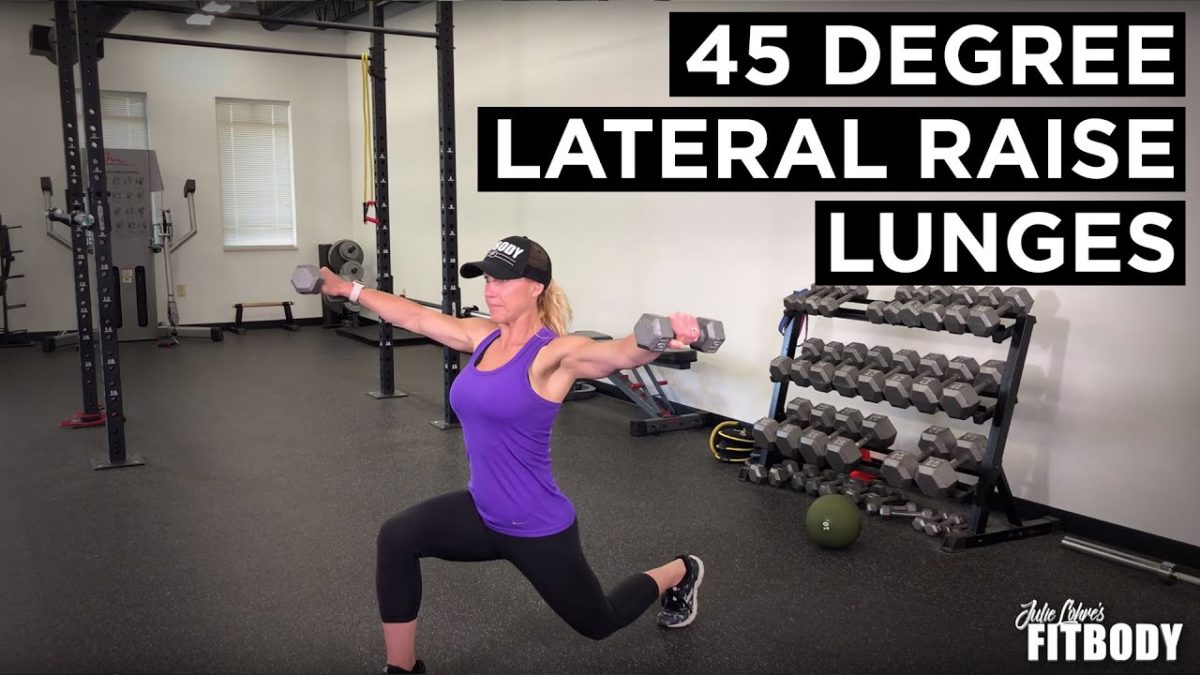
45 Degree Lunge with Lateral Raise
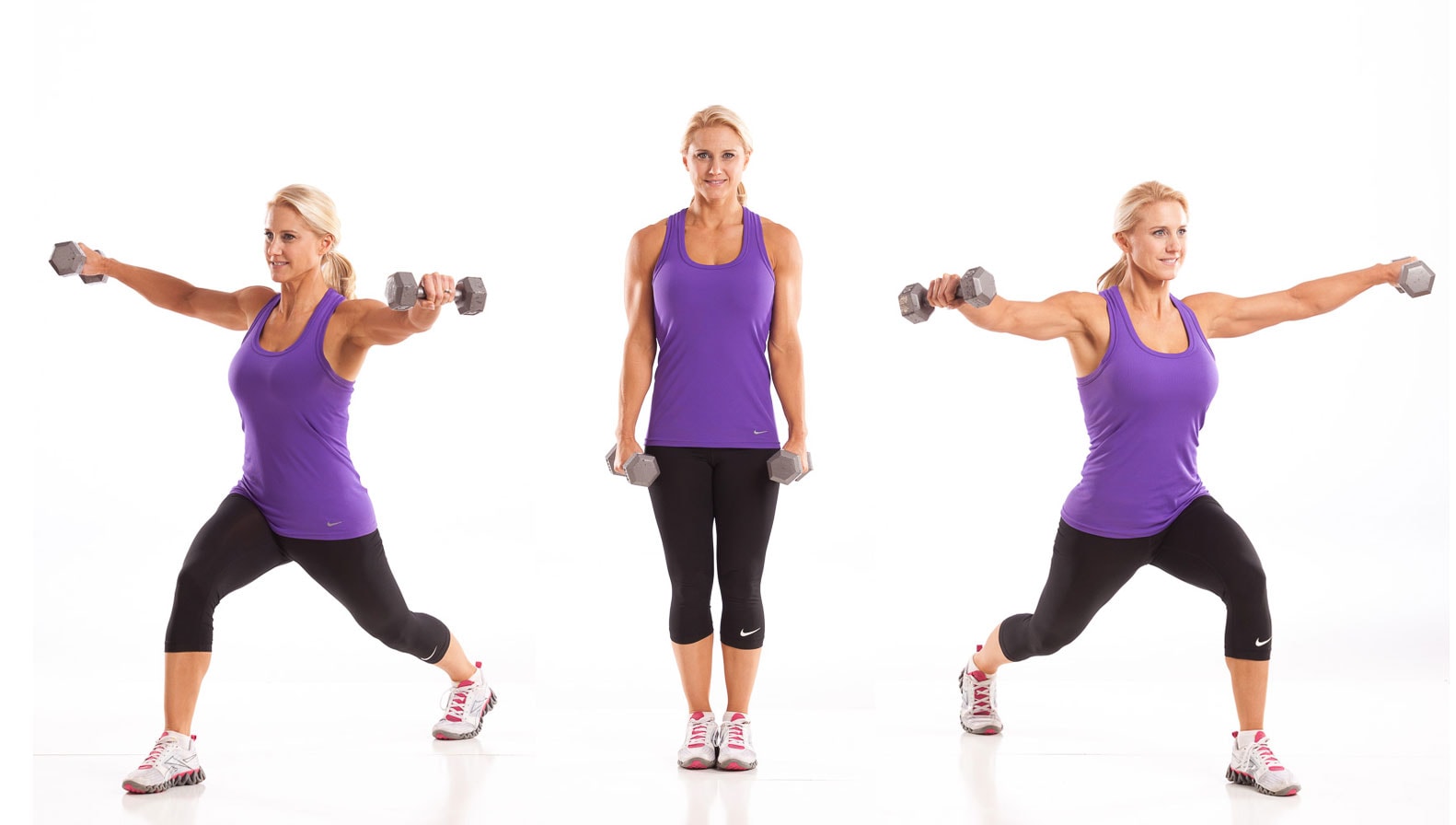
The 45 degree lunge with lateral raise is a compound dumbbell exercise that pairs a directional lunge with a shoulder lateral raise, working the quads, glutes, side delts, and stabilizers in one efficient movement.
How to Do the 45 Degree Lunge with Lateral Raise
Do not try to lunge and raise at the same time. Descend into the lunge first and get stable at the bottom, then perform the lateral raise. Rushing the two movements together turns this into a wobble instead of a strength exercise. Slow the tempo down and the results follow.

What Muscles Does the 45 Degree Lunge with Lateral Raise Work?
The 45 degree lunge with lateral raise loads the quads, glutes, and adductors through the directional lunge, while the lateral raise directly targets the medial deltoids and rotator cuff. Because you are stepping at an angle instead of straight forward, the gluteus medius on the front-leg side works harder to control the knee and stabilize the pelvis. The core is engaged throughout, resisting the rotational pull of the offset stance. This kind of multi-plane, unilateral training is exactly what I build into strength blocks inside my FITBODY Recomposition System. For a visual reference on the gluteal region muscles, TeachMeAnatomy has a clear overview.
See the full muscle breakdown
- Quadriceps: the primary drivers of the lunge, extending the front knee to return you to standing.
- Gluteus maximus: extends the hip out of the bottom of the lunge and shapes the lift back to standing.
- Gluteus medius: stabilizes the pelvis and controls the front knee, especially with the 45 degree offset stance.
- Adductors and inner thighs: work harder here than in a standard forward lunge because of the wider directional step.
- Medial deltoids: the primary movers on the lateral raise, lifting the arms out to the sides at shoulder height.
- Rotator cuff and shoulder stabilizers: keep the shoulder joint centered and safe during the raise.
- Core and obliques: resist the rotational pull of the offset stance and keep the torso upright.
Sets and Reps
Because this is a compound exercise combining a lower body and shoulder movement, load is limited by the lateral raise. Program it inside a strength block, a shoulder day, or a full-body circuit and choose a weight that lets the raise stay clean.
| Goal | Sets per side | Reps |
|---|---|---|
| Strength and coordination | 3 to 4 | 8 to 10 |
| Hypertrophy and time under tension | 3 | 10 to 12 |
| Beginner or introducing the exercise | 2 | 6 to 8 with a light dumbbell or bodyweight |
Rest 45 to 75 seconds between sides or sets. Load is capped by the lateral raise, not the lunge. If you can only lift a light dumbbell overhead through a clean raise, that is the weight for the whole exercise. Chasing lunge weight while the raise turns into a shrug defeats the point.
Variations and Modifications
Bodyweight 45 Degree Lunge with Lateral Raise (Easier)
Run the same pattern with no dumbbells. Great starting point for learning the 45 degree stepping pattern and stability at the bottom of the lunge before adding shoulder load.
Static Version
Hold the lunge at the bottom position while you complete two or three lateral raises before returning to standing. Reduces the coordination demand and lets you focus on cleaner shoulder mechanics without the movement of the lunge added in.
Alternating 45 Degree Lunge with Lateral Raise
Alternate sides on every rep instead of completing a full set on one leg before switching. Adds a rhythm and coordination challenge and works well in a conditioning-style circuit.
Kettlebell Version (Advanced)
Use two light kettlebells instead of dumbbells. The offset load of the bells adds an extra grip and shoulder stability demand at the top of the raise. Reserved for lifters comfortable with both the movement pattern and kettlebells.
Related lower-body and shoulder movements can be found in the FITBODY Exercise Library.
Common Mistakes to Avoid
- Rushing the two movements together. Descend into the lunge first, stabilize, then raise. Trying to do both at once turns the exercise into a wobble instead of a strength lift.
- Front knee caving inward. The 45 degree stance can pull the front knee toward the midline. Cue the knee to track over the middle toes and drive it out slightly against the natural pull.
- Shrugging the shoulders on the raise. If the dumbbells travel toward your ears at the top, the traps are taking over. Drop the weight and cue the shoulders down and away from the ears.
- Torso leaning forward or twisting. Chest stays tall and hips face forward. Any lean or rotation means the load is too heavy or the offset step is too wide.
45 Degree Lunge with Lateral Raise FAQs
What muscles does the 45 degree lunge with lateral raise work?
The 45 degree lunge with lateral raise works the quadriceps, gluteus maximus, and medial deltoids as the primary movers, with strong support from the gluteus medius, adductors, hamstrings, rotator cuff, and core. The directional 45 degree step increases the demand on the adductors and gluteus medius compared with a standard forward lunge, and the lateral raise adds a focused hit for the side delts. It is one of the more efficient compound movements for hitting legs and shoulders in the same set.
What is a 45 degree lunge?
A 45 degree lunge is a directional lunge where you step forward and out to the side at a 45 degree angle instead of straight forward or directly out to the side. Both feet stay pointing forward. This creates a stance that is wider than a standard forward lunge but not as wide as a lateral lunge, which shifts more of the work into the inner thighs and gluteus medius. It is a great addition to a training program because it trains the hips through a plane most exercises ignore.
How much weight should I use for the 45 degree lunge with lateral raise?
Weight is capped by the lateral raise, not the lunge. Most women land in the 5 to 10 pound dumbbell range here. If you can only lift a light dumbbell overhead through a clean, controlled raise, that is the weight for the whole exercise. Chasing a heavier lunge weight while the raise turns into a shrug or a swing defeats the entire point. Progress by adding reps or sets before you add weight, and let the raise dictate the load.
Is the 45 degree lunge safe for knees?
For most women with healthy knees, yes. The directional step pattern is very knee-friendly because you can control range of motion and descend only as far as feels comfortable. The keys are keeping the front knee tracking over the middle of the foot, descending under control instead of dropping into the lunge, and starting bodyweight before adding load. If you have a history of knee issues, active pain, or a recent injury, clear this and any lunge variation with your physical therapist or physician first.
Can I do the 45 degree lunge with lateral raise with resistance bands?
Yes, resistance bands work well as a substitute for dumbbells here, especially for the lateral raise portion. Stand on the middle of a light to moderate band, hold one end in each hand, and perform the movement the same way. Bands add tension progressively through the raise, which can actually be a nice cue for a slower, more controlled tempo. Great option if you are training from home without dumbbells or want a joint-friendly alternative.
References
- Speirs, Derrick E., et al. “Unilateral vs. Bilateral Squat Training for Strength, Sprints, and Agility in Academy Rugby Players.” Journal of Strength and Conditioning Research, vol. 30, no. 2, 2016, pp. 386-392, https://doi.org/10.1519/JSC.0000000000001096.
Train With An Expert
Want a Plan Built Around You?
I’m Julie Lohre, an IFBB Fitness Pro and certified personal trainer and nutrition specialist. For more than 20 years I have helped women over 40 get stronger, leaner, and more confident through personalized online coaching built around their real lives.