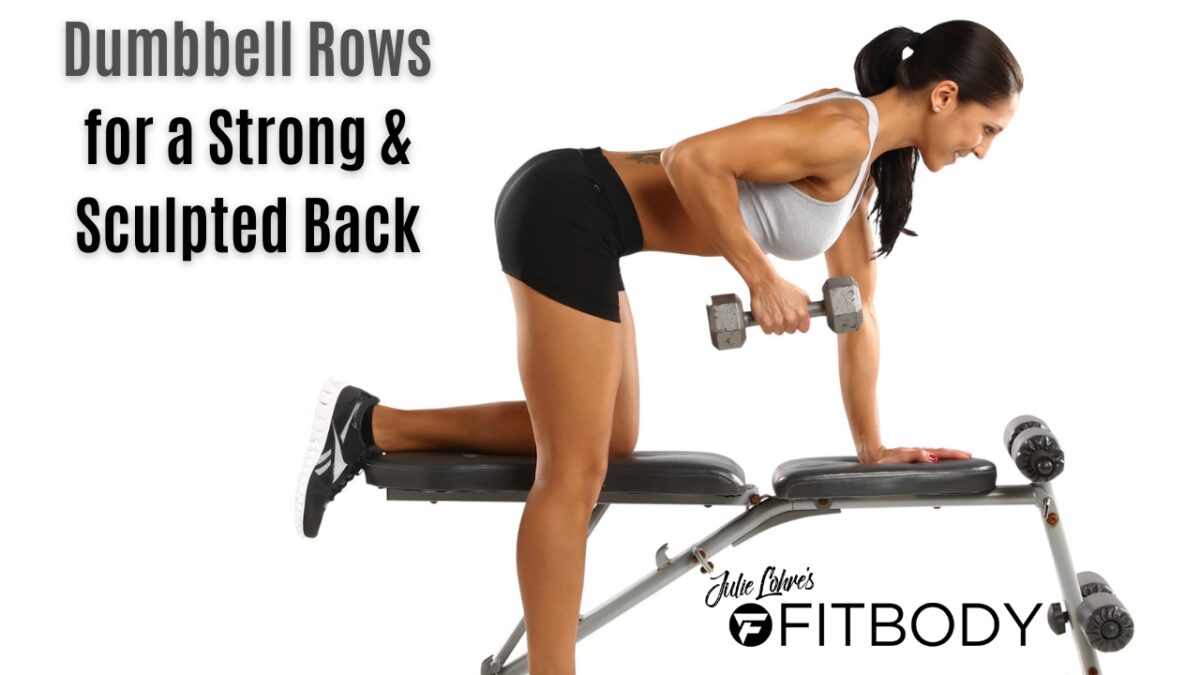
Dumbbell Rows for a Strong & Sculpted Back: Mastering the Single Arm Row
The Single Arm Dumbbell Row: Unleash Your Inner Strength
Are you ready to level up your strength and sculpt those gorgeous back muscles? Look no further than the mighty dumbbell row! In this article, I’ll dive into the exciting world of single arm dumbbell rows, exploring how to perform bent over rows with a dumbbell correctly and their incredible benefits for women’s fitness. So, grab your dumbbell and let’s get rowing!
What Muscles do Single Arm Rows Target?
During single arm bent over dumbbell rows, you engage multiple muscle groups in your upper body, creating a comprehensive and effective workout. Let’s break it down:
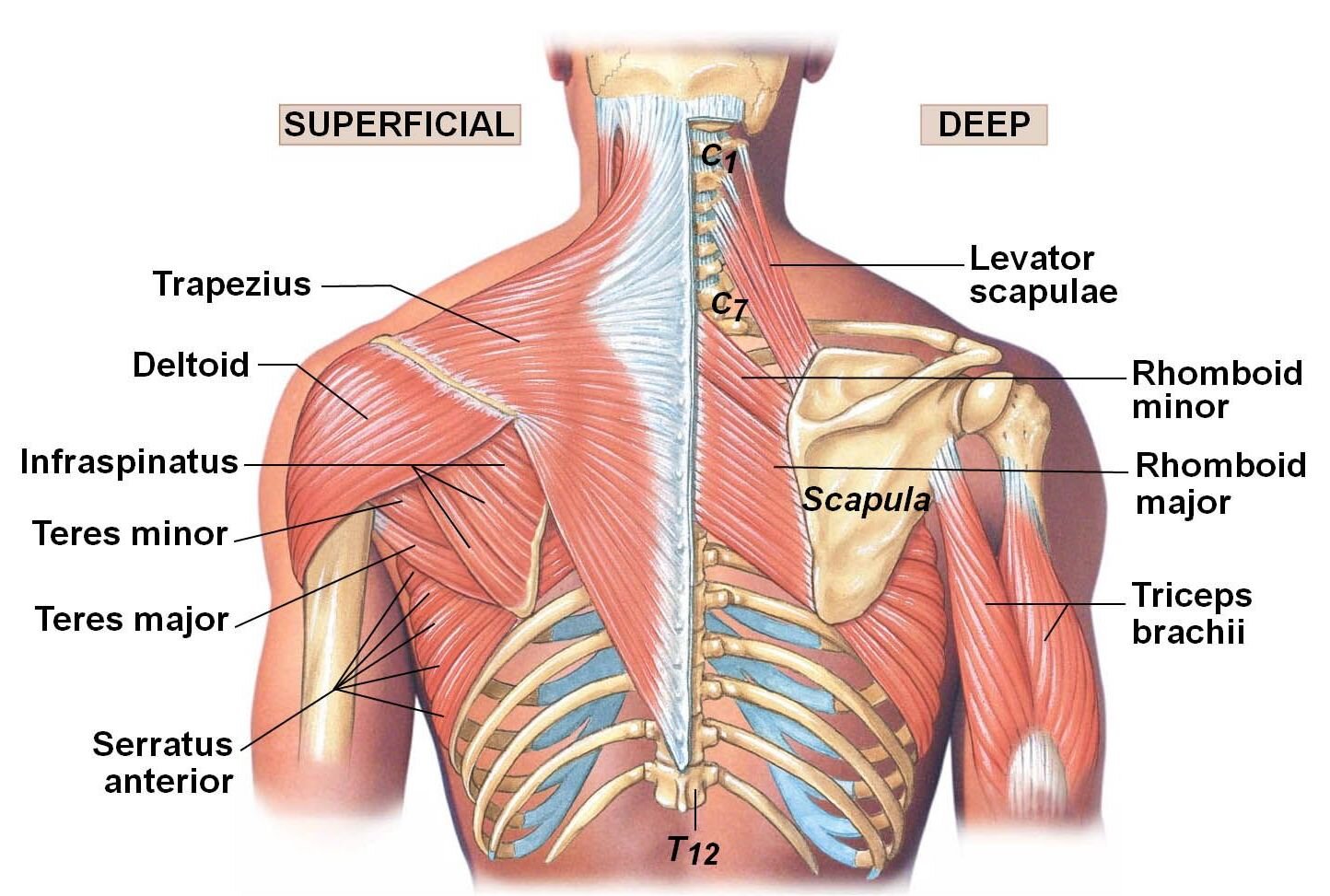
- Latissimus Dorsi (Lats): The primary target of this exercise, the lats, are the largest muscles in your back. They extend from the mid to lower back and play a key role in shoulder extension, adduction, and overall upper body strength.
- Rhomboids: Located between your shoulder blades, the rhomboids help retract and stabilize your scapulae. Strengthening these muscles can improve posture and contribute to a balanced, sculpted upper back.
- Trapezius (Traps): The traps are a complex muscle group that spans the upper and middle back, extending up to the neck. They assist in scapular retraction and elevation, as well as neck extension. Developing strong traps can contribute to better posture and overall upper body strength.
- Rear Deltoids: Situated at the back of your shoulders, the rear deltoids are responsible for shoulder horizontal abduction and external rotation. Targeting these muscles helps create a well-rounded shoulder profile and enhances overall shoulder stability.
- Biceps Brachii: While not the primary focus, the biceps come into play during single arm rows as they act as secondary movers. These muscles are responsible for elbow flexion and forearm supination.
- Forearms: Gripping the dumbbell tightly throughout the exercise engages the muscles of your forearms, particularly the flexors. This can lead to improved grip strength, which is beneficial for various activities both in and out of the gym.
- Core Muscles: To maintain stability and prevent rotational movements, your core muscles, including the transverse abdominis, rectus abdominis, and obliques, must engage throughout the exercise. This helps to promote a strong and stable torso.
By targeting these muscle groups simultaneously, single arm bent over dumbbell rows provide a well-rounded upper body workout. Incorporating this exercise into your fitness routine can lead to improved posture, enhanced back and shoulder definition, increased upper body strength, and greater overall functional fitness.
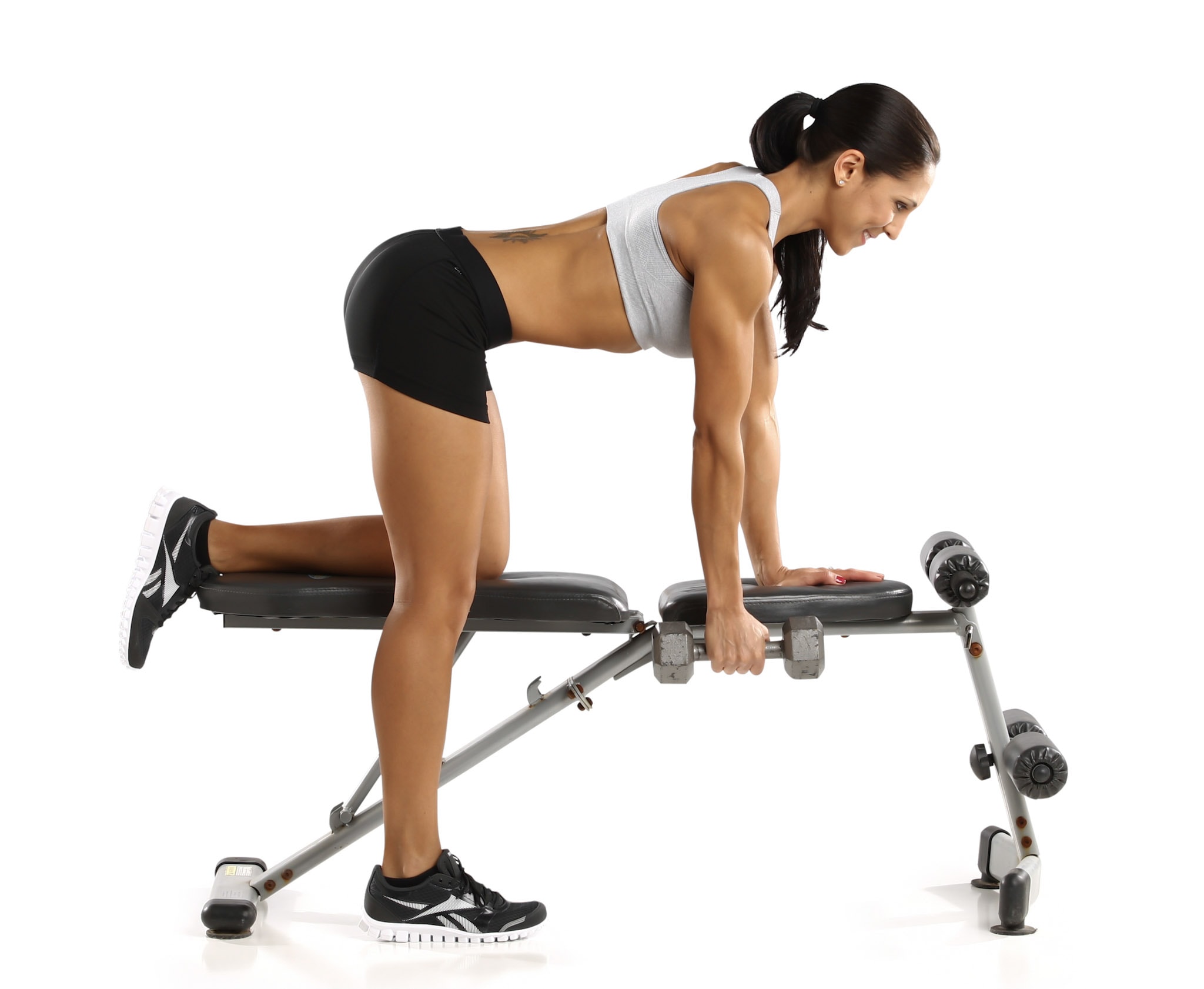
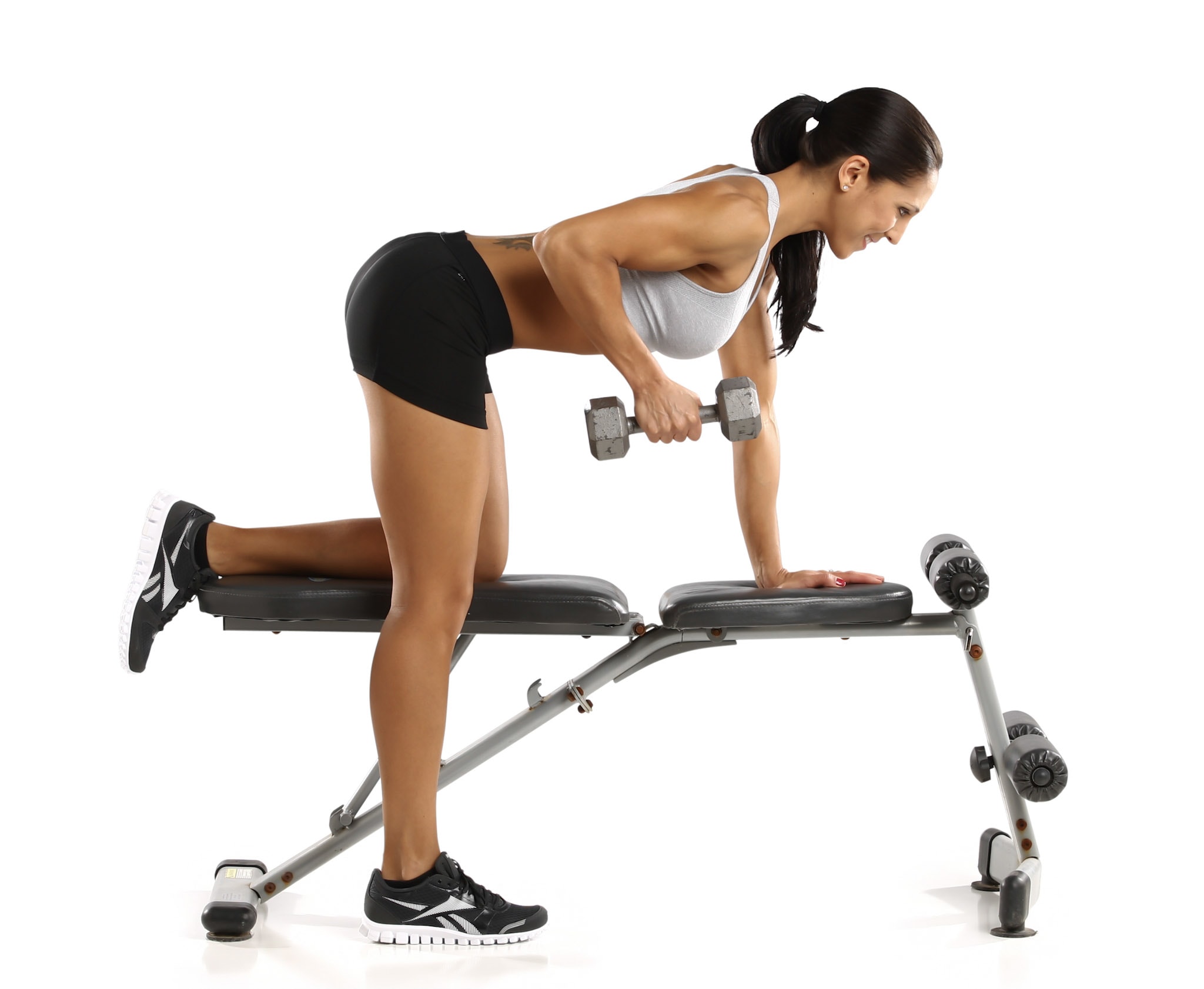
How to to a Single Arm Dumbbell Row:
One of the most effective exercises to strengthen your upper body, the single arm dumbbell row targets several key muscle groups. To perform this exercise, follow these simple steps:
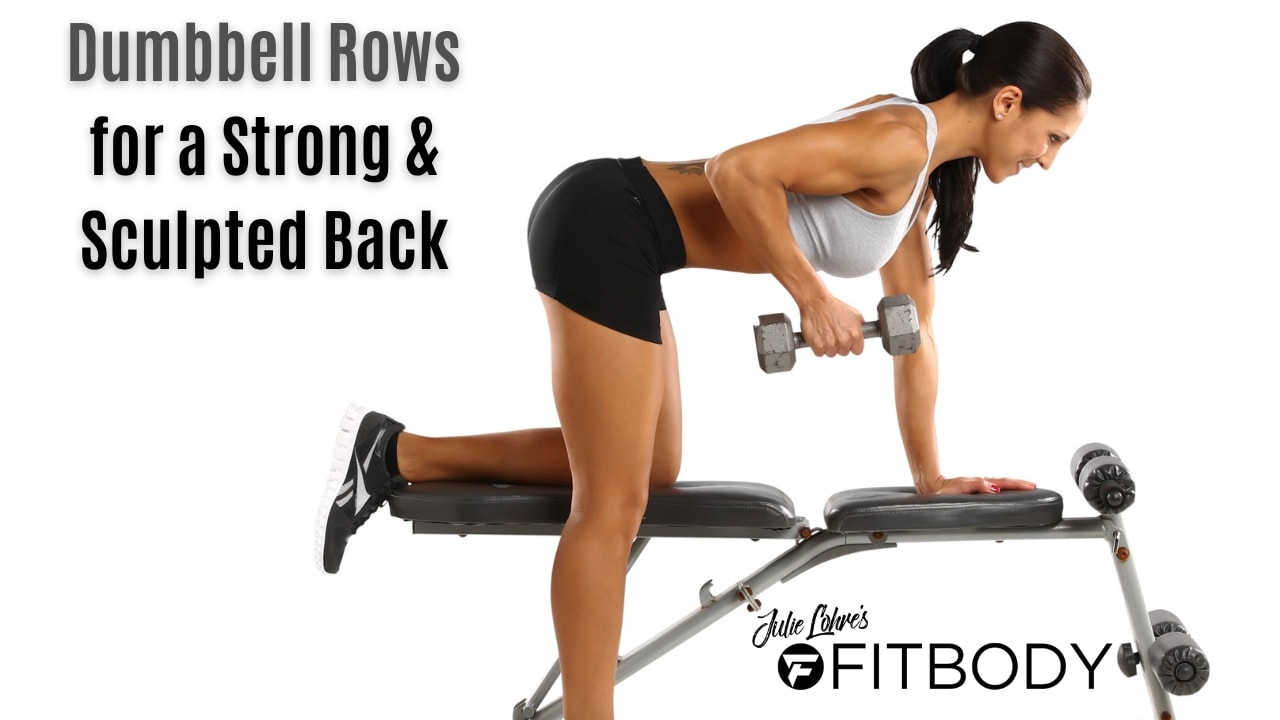
Step 1: Set Up Your Starting Position: Begin by placing a single dumbbell on the floor. Stand with your feet shoulder-width apart, slightly bending your knees. Keep your back straight and engage your core. Bend forward from your hips, maintaining a neutral spine. I like to use an exercise bench to rest my right hand and right knee if I am doing a single arm bent over row on the left and vice versa
Step 2: Grasp the Dumbbell: With your palm facing inward, reach down and grab the dumbbell. Ensure you have a comfortable grip, and avoid using a weight that is too heavy or too light. Find the sweet spot that challenges you without compromising form.
Step 3: Initiate the Row: As you exhale, pull the dumbbell towards your torso, driving your elbow straight up. Focus on squeezing your shoulder blade back and down while keeping your core engaged. I like to think about keeping my elbow tucked in to my side throughout the movement which will keep your arm close to your body helping you maintain control throughout the movement.
Step 4: Lower and Repeat: Inhale as you slowly lower the dumbbell back down, extending your arm fully. Repeat the exercise for the desired number of reps, then switch arms.
If you do not have a bench available, you can do standing dumbbell rows instead!
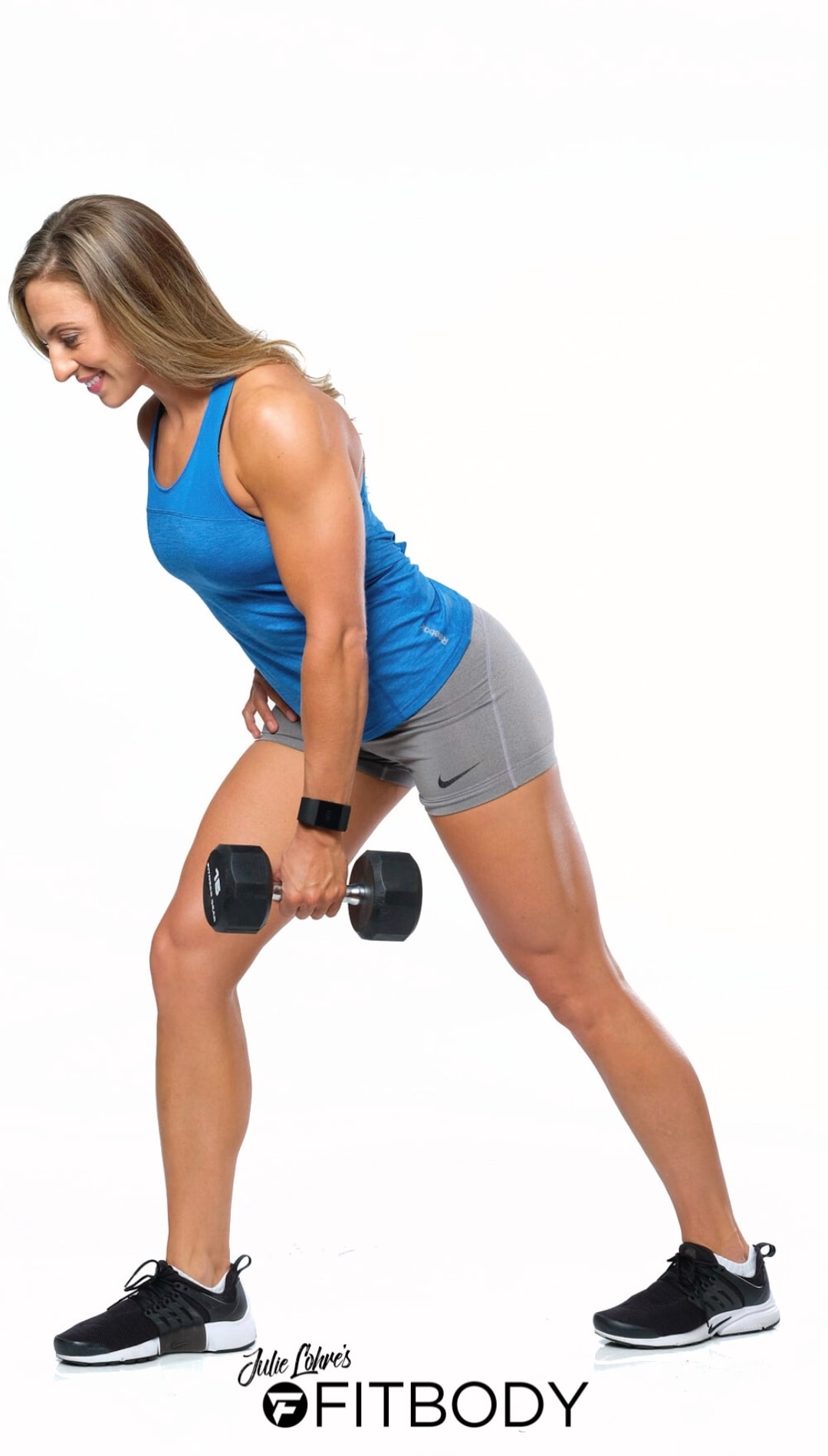
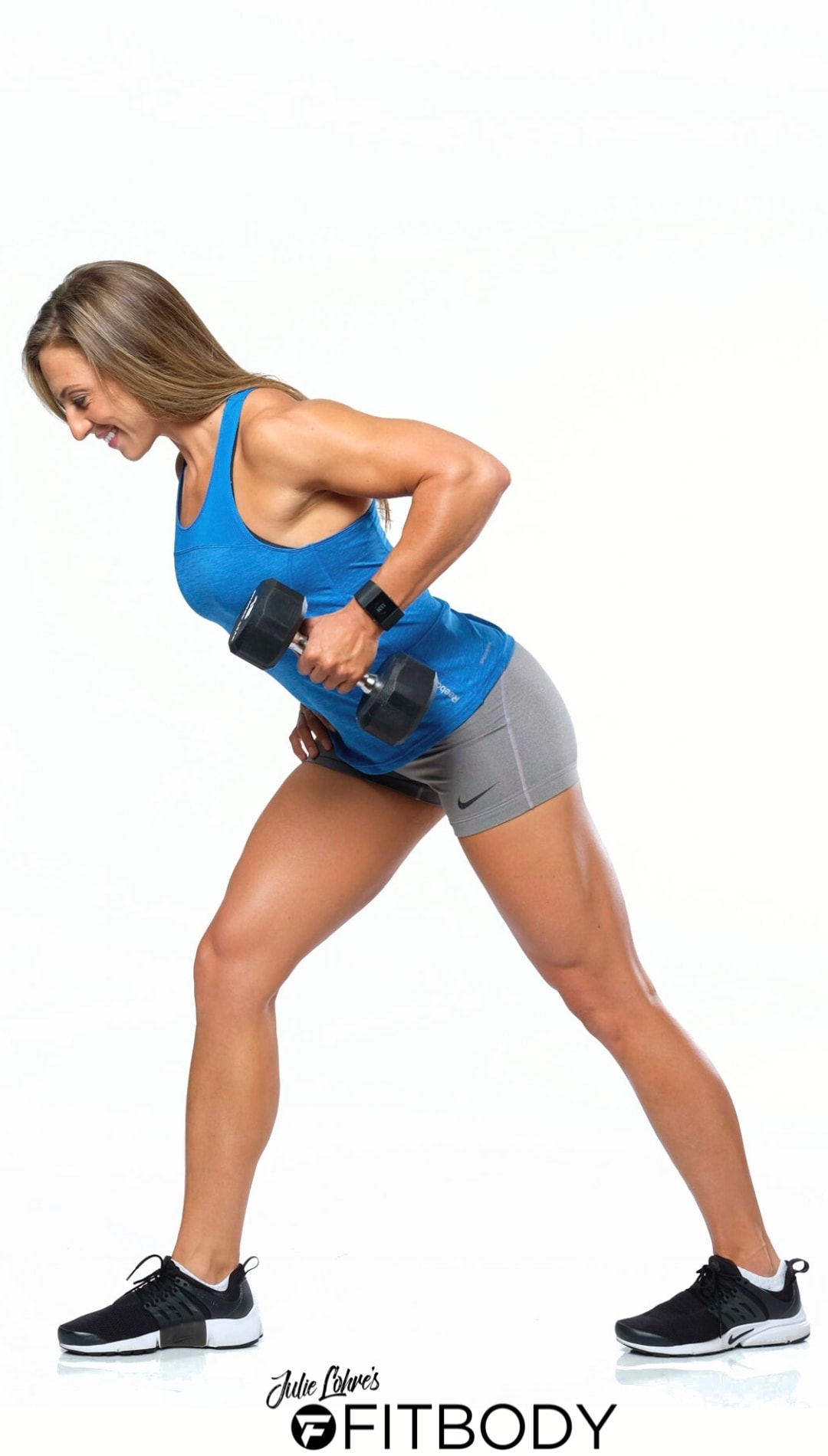
Benefits of Dumbbell Rows: Why You Should Incorporate Them
Single arm bent over dumbbell rows offer a multitude of benefits that make them a valuable addition to your exercise routine which is why I often include them in my Online Personal Training for Women client programs. First and foremost, they are highly effective for strengthening and sculpting your upper body. By targeting muscles such as the lats, rhomboids, traps, rear deltoids, biceps, and forearms, these rows help create a balanced and defined back, shoulders, and arms. Improved muscle strength and tone in these areas contribute to better posture, enhanced upper body aesthetics, and increased overall functional fitness.
Additionally, single arm bent over rows require core stabilization, engaging your abdominal muscles, obliques, and lower back. This not only strengthens your core but also improves your overall stability and balance. As a bonus, the exercise stimulates grip strength development due to the need to firmly hold the dumbbell throughout the movement. This can have a positive impact on various activities in your daily life that require a strong grip.
Furthermore, incorporating single arm bent over dumbbell rows can help correct muscular imbalances between your left and right sides. By working one arm at a time, you can identify and address any disparities in strength or muscle development, leading to more balanced upper body strength and function.
Lastly, single arm bent over rows offer versatility and convenience. They can be performed with just a dumbbell and minimal space, making them accessible for home workouts or when you’re on the go. Whether you’re a beginner or an experienced fitness enthusiast, these rows can be modified to suit your fitness level by adjusting the weight used.
Single Arm Row vs. Both Arms: Which Is Better?
While both single arm and both arms dumbbell rows offer great benefits, single arm rows have some unique advantages. By using one arm at a time, you’re able to focus on form and ensure balanced strength development. Single arm rows also engage your core more effectively, as you need to stabilize your body throughout the movement which makes them one of my favorite back exercises personally and for my clients.
Common Mistakes to Avoid When Performing Dumbbell Rows
To stay safe during your dumbbell row workout, steer clear of these common mistakes:
- Rounded Back: Avoid rounding your back as you row. This puts unnecessary strain on your spine and reduces the effectiveness of the exercise. Keep your back straight and maintain proper form throughout.
- Jerking Motions: Maintain control throughout the exercise and avoid jerking the weight up or down. Smooth, controlled movements are key to engaging the target muscles effectively.
- Neglecting Core Engagement: Remember to engage your core muscles throughout the exercise. A strong core not only enhances stability but also maximizes the benefits of the single arm dumbbell row.
Now that you’re armed with the knowledge of how to perform a single arm dumbbell row, it’s time to take action and add this empowering exercise to your fitness routine. Not only will you strengthen and tone your back and shoulders, but you’ll also experience the added benefits of improved core stability and grip strength. So grab your dumbbells and row your way to a fitter, stronger you!
Remember, proper form is crucial for getting the most out of your workouts. By avoiding common mistakes and staying consistent, you’ll be well on your way to achieving your fitness goals with the mighty dumbbell row!
ARE YOU NEXT?
Read more about the women transforming their lives with FITBODY Online Personal Training!