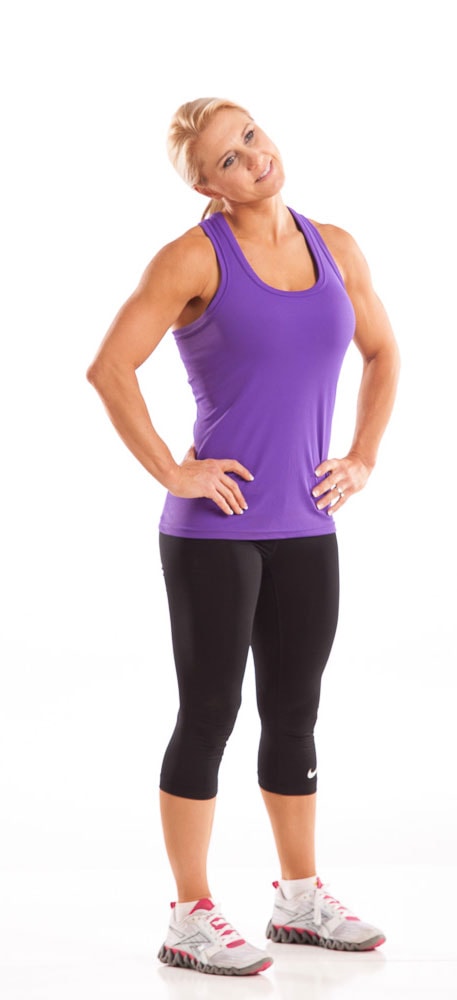
neck rotations proper form cervical mobility stretch

Neck Rotation

FITBODY Exercise Library · Mobility & Warmup

Neck Rotations

Neck rotations are a gentle cervical mobility drill that reduces stiffness, improves neck range of motion, and preps you for training or eases tension after a long day at a desk.

Target AreaCervical spine
Also WorksUpper traps, sternocleidomastoid, levator scapulae
EquipmentBodyweight, no equipment
LevelAll levels
MovementCervical rotation, side to side
Watch ForSlow tempo, never force range

How to Do Neck Rotations

1
Set your posture. Sit tall or stand tall with feet hip-width apart. Shoulders relaxed away from your ears, chin gently tucked so your ears stack over your shoulders, gaze forward.
2
Rotate to one side. Slowly turn your head to look over your right shoulder as far as feels easy. Keep your chin level and your shoulders quiet. Pause for one to two seconds at the end range.
3
Return to center. Bring your head back to a neutral, forward-facing position at the same slow, controlled tempo you used going out. Reset your posture.
4
Rotate to the other side. Slowly turn your head to look over your left shoulder to the same comfortable range. Pause, then return to center. That is one full repetition.
Julie’s Tip

Slow and quiet wins here. If you are rushing through neck rotations, you are missing the point. Move at half the speed you think, breathe steadily, and stop the moment you feel a pinch or a sharp pull. Range of motion improves over weeks of consistency, not in one aggressive session.

neck rotations proper form cervical mobility stretch
Neck rotation stretch performed with controlled cervical rotation and relaxed shoulders.

What Muscles Do Neck Rotations Work?

Neck rotations mobilize the cervical spine and gently lengthen the muscles that surround it, including the sternocleidomastoid, upper trapezius, levator scapulae, and splenius capitis. These are the same muscles that quietly tighten from long hours at a desk, poor sleep positions, and general stress. A short daily dose of neck rotations helps restore comfortable range and pairs well with the full warmup approach I use inside my FITBODY Recomposition System. For a visual reference on the muscles of the neck, TeachMeAnatomy has a clear overview.

Primary
Cervical spine
Secondary
SternocleidomastoidUpper trapeziusLevator scapulaeSplenius capitis
See the full muscle breakdown
  • Cervical spine (C1 to C7): the seven neck vertebrae that rotate as a unit through the drill, which is the joint work this exercise is really about.
  • Sternocleidomastoid: runs along the front and side of the neck, lengthens as you rotate away from it.
  • Upper trapezius: sits across the top of the shoulders into the neck, relaxes and releases with slow rotation.
  • Levator scapulae: connects the upper cervical spine to the shoulder blade and is often chronically tight from desk work and phone use.
  • Splenius capitis: deep at the back of the neck, helps guide and stabilize head rotation.

How to Program Neck Rotations

Neck rotations are prep work, not a workout. Use them as part of a warmup, as a daily mobility habit, or as a quick reset during long stretches of desk time. Volume should be light and controlled every time.

Use caseSetsReps per side
Pre-training warmup15 to 8
Daily mobility session2 to 38 to 10
Desk break or tension relief13 to 5 slow reps

Move at a slow, controlled tempo through every rep. Pause briefly at the end of each rotation. If you have any active neck pain, recent injury, or history of cervical issues, clear this and any mobility work with your physical therapist or physician before adding it in.

Variations and Modifications

Seated Neck Rotations

Perform the same movement seated in a supportive chair with your feet flat on the floor. A good option if you have balance concerns, are recovering from surgery, or want to remove any distraction from posture while you focus on quality neck movement.

Neck Rotations with a Chin Tuck

Between each rep, gently tuck your chin toward your throat before rotating to the next side. Layering in a chin tuck reinforces good cervical posture and helps counter the forward-head position most of us fall into throughout the day.

Half-Range Neck Rotations

Rotate only about halfway to your normal end range. A smart option if you are early in recovery from whiplash, cervical strain, or any acute neck stiffness. Range should always be earned, not forced.

Full Neck Mobility Flow

Combine neck rotations with gentle ear-to-shoulder side flexion and a slow chin-to-chest movement for a complete cervical mobility flow before training. This is the version I use in the warmups I build inside my FITBODY Lifestyle Coaching program.

Related warmup and mobility movements can be found in the FITBODY Exercise Library.

Common Mistakes to Avoid

  • Moving too fast. Whipping the head from side to side defeats the purpose and can leave the neck feeling worse. Slow every rep down.
  • Hiking your shoulders. Shoulders should stay soft and relaxed away from your ears through every rotation. Tight upper traps will fight the movement.
  • Pushing into pain. Rotation should feel like a comfortable stretch, never sharp or pinching. Back off the moment anything catches.
  • Treating it as a workout. Neck rotations are prep and recovery. Adding more volume does not build strength, it just fatigues the tissue.

Neck Rotation FAQs

What do neck rotations do?

Neck rotations mobilize the cervical spine and gently lengthen the surrounding muscles, including the sternocleidomastoid, upper trapezius, levator scapulae, and splenius capitis. They restore comfortable side-to-side range of motion, ease stiffness that builds up from desk work and stress, and prep the neck for training. Consistent, slow reps a few times per week can noticeably improve how loose and comfortable your neck feels day to day.

How often should I do neck rotations?

Daily is fine for this drill. A short set as part of your warmup before training, a full mobility round two to three times per week, and a quick reset during long stretches of desk work all pair well. Keep the volume light. Five to ten slow reps per side is plenty. This is prep and maintenance work, not a movement to chase intensity on.

Are neck rotations safe for women over 40?

Yes, for most women, slow controlled neck rotations are a safe and useful daily habit. The keys are moving slowly, respecting your comfortable range, and never forcing rotation into pain. If you have a history of cervical disc issues, recent whiplash, ongoing neck pain, or any post-surgical restrictions, clear this and any other mobility work with your physical therapist or physician before adding it in. Inside my FITBODY Lifestyle Coaching program, I choose warmup and mobility work based on each client’s history and current level.

Can neck rotations help with neck pain and stiffness?

For everyday stiffness from long hours at a desk, poor sleep positions, and general stress, gentle neck rotations often help by restoring range and reducing the tight, guarded feeling in the surrounding muscles. Broader research on exercise for mechanical neck disorders supports the value of movement over prolonged rest for garden-variety neck complaints. That said, if pain is sharp, radiating into an arm, associated with numbness or tingling, or lingering more than a couple of days, that is a signal to stop, avoid the movement, and see a qualified provider.

Should I do neck rotations before or after strength training?

Both is fine. As part of your warmup, one slow set of five to eight per side helps prep the neck for movement, especially before upper-body training. After a session, neck rotations can be part of a short cooldown mobility flow to release tension in the upper traps and cervical area. Skip them entirely between heavy overhead sets, since you want the neck stable and neutral under load, not freshly stretched.

References

  1. Gross, Anita, et al. “Exercises for Mechanical Neck Disorders.” Cochrane Database of Systematic Reviews, no. 1, 2015, art. no. CD004250, https://doi.org/10.1002/14651858.CD004250.pub5.

Train With An Expert

Want a Plan Built Around You?

I’m Julie Lohre, an IFBB Fitness Pro and certified personal trainer and nutrition specialist. For more than 20 years I have helped women over 40 get stronger, leaner, and more confident through personalized online coaching built around their real lives.